
If board games be the food of love...
…Play on, but please stop eating the components, it’s not as sexy as you think it is.
It’s a well-known fact that couples who play together… have more fun in lockdown. Low player counts are where it’s at for most of us right now, and at a time when we all have limited options available for Valentine’s Day, we’ve been thinking about our top choices for turning games night into date night.
Take a trip
Like the idea of a romantic weekend away? Of course you do - we’ve all been stuck in our houses for months! Here are some games to help transport you to a different place and time…
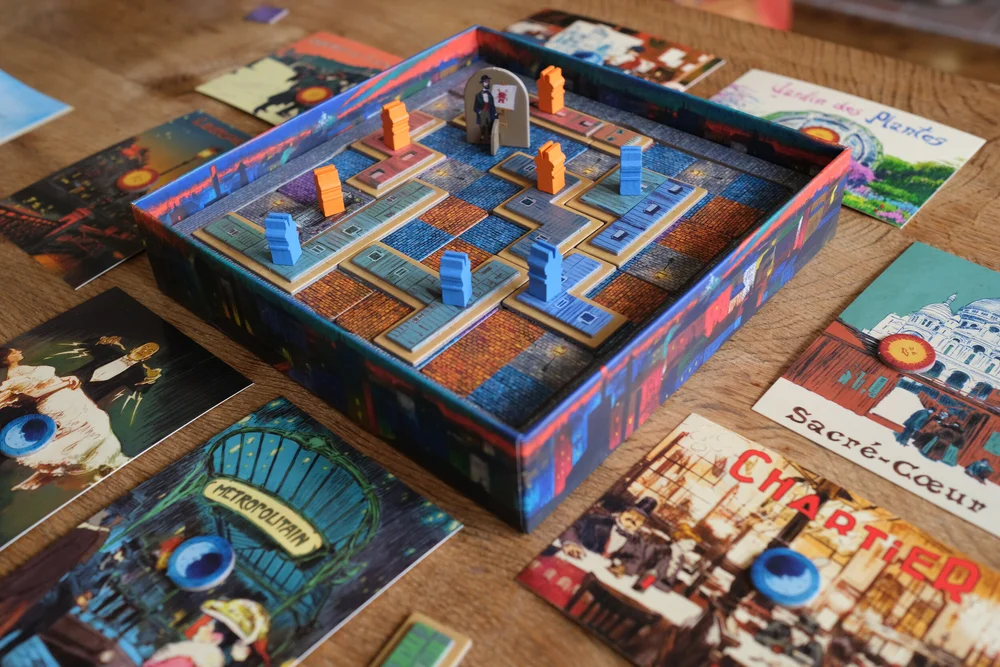
Paris: City of Light. It might be a cliché as romantic destinations go, but the board game version of Paris will not disappoint! We first got our hands on this chic little two-player strategy game back in Lockdown 1, when it proved an immediate hit. The game is set in the late 19th Century when electric lighting had just arrived in the city. You are architects trying to capitalise on this exciting new invention by placing buildings on the best illuminated streets where they will be most admired by passers-by. The gameplay takes place over two phases: a tile-placing, building-claiming phase where you take turns to either pick a building tile to be used later, or place a coloured street tile on the board to reserve an area to build on. In phase two, you try to squeeze your buildings into your reserved spots, aiming to place them next to as many street lights as possible in order to maximise your score, with the help of a few tricks accessed by placing your token on the relevant beautiful postcard before the other player can do the same.
Just one word of warning: the streets of Paris can get a little mean, given that the strategy is as much about blocking your opponent as it is about bringing your own plans to life, so perhaps go elsewhere if fierce competition and romance don’t feel like match made in heaven!
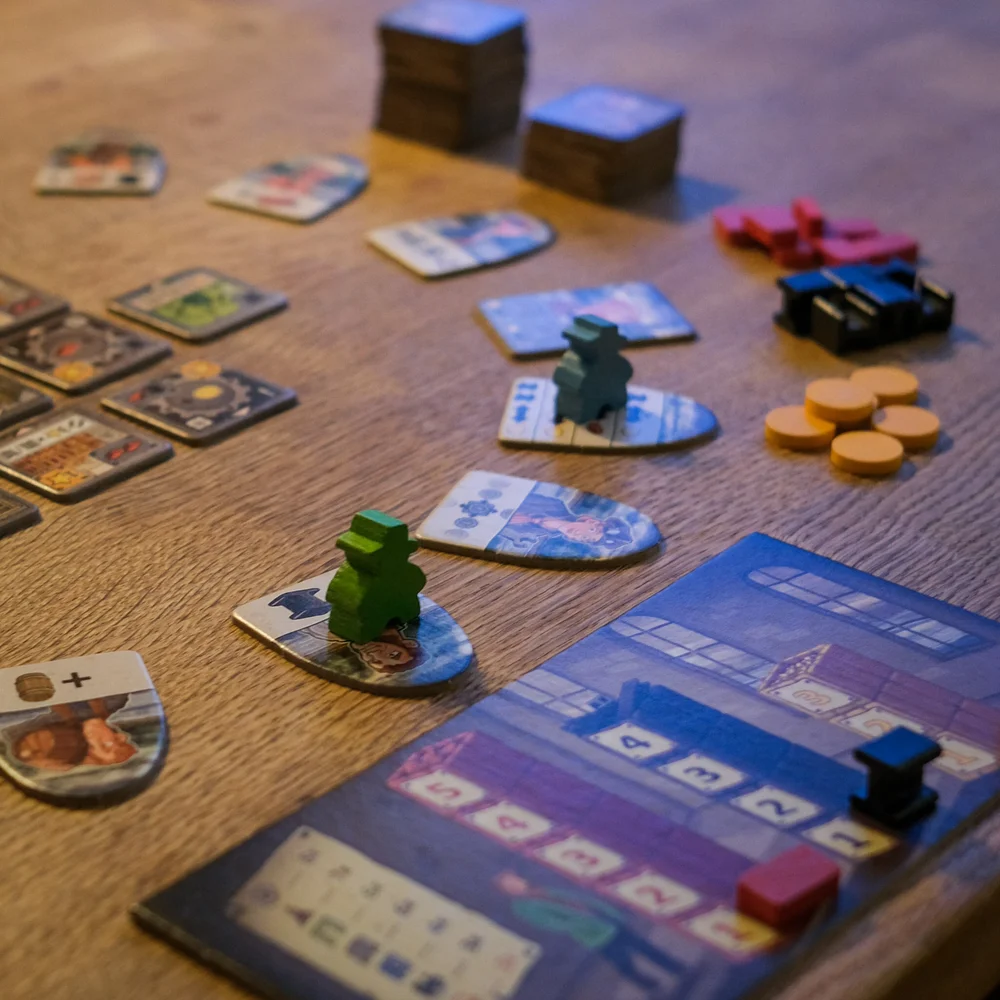
Glasgow. If you prefer your getaways a little grittier, you might enjoy a trip down the river Clyde in this neat strategic city builder. Players each control one worker, which make their way around a circle of tiles representing stops along the river in Victorian industrial Glasgow. Each stop allows you to perform a specific action, perhaps gaining resources or using what you have already to construct a building, represented by tiles in the centre of the circle. Buildings you’ve added score you points at the end of the game, but some of them will help you along the way too, by being activated whenever another building is placed in the same row or column.
It might not be the most glamourous (the game’s artwork is firmly in the traditional, beige-heavy Euro game style), but Glasgow certainly makes for an interesting and enjoyable destination well-worthy of repeat visits.
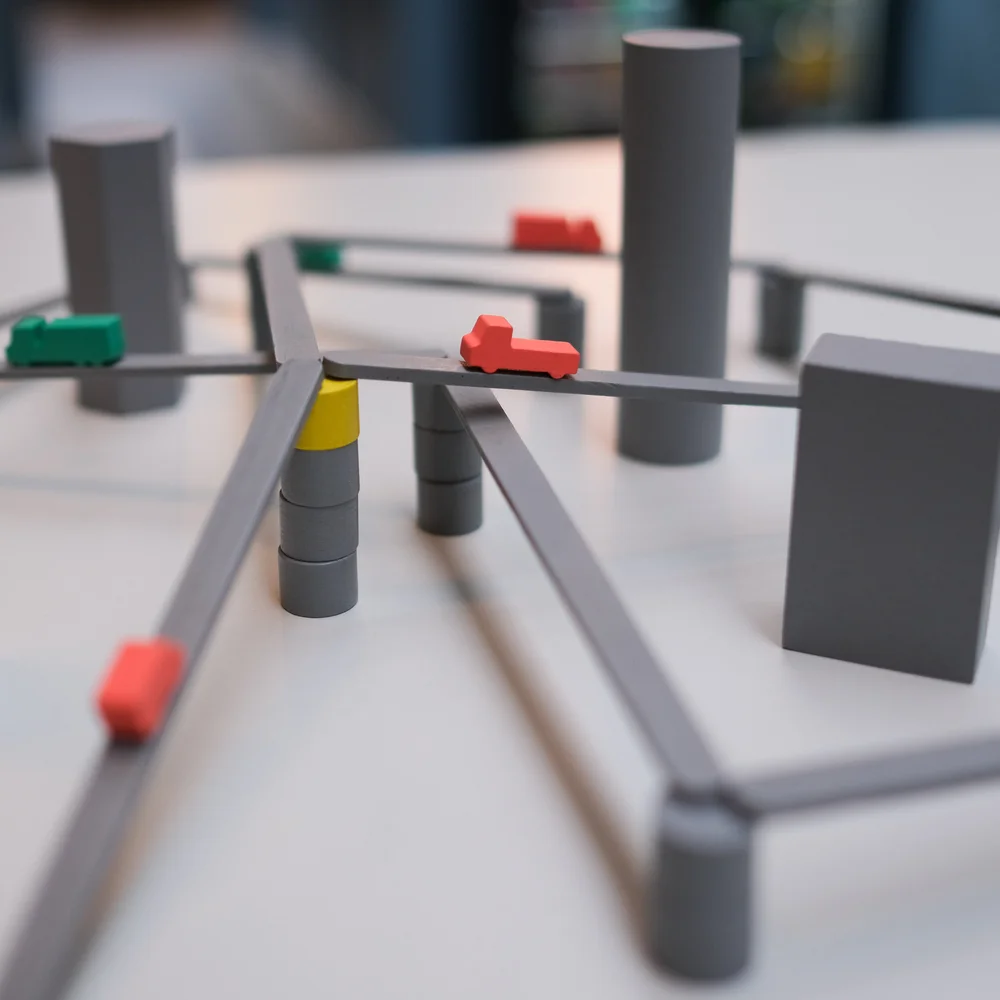
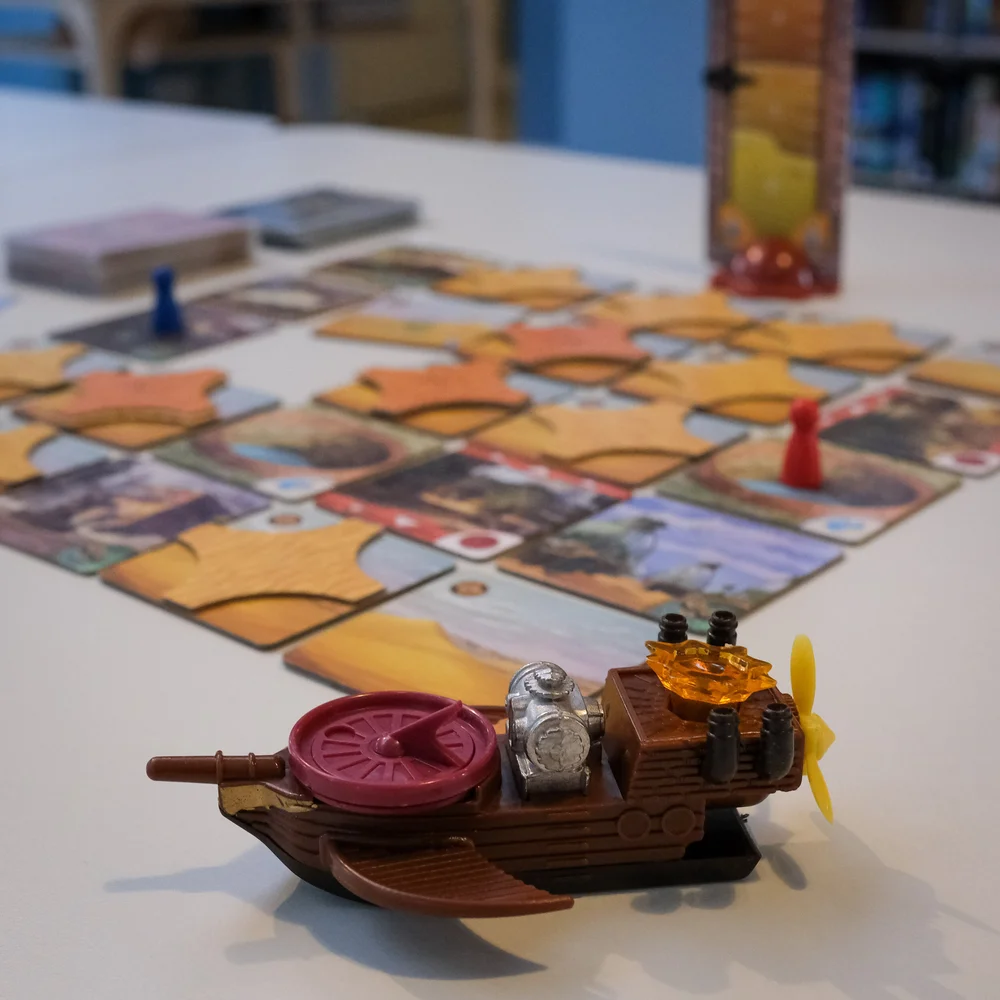
Tokyo Highway. If you’re ready for a dramatic change of scenery, Tokyo Highway might be just the escape you’re looking for, but be prepared to build the dramatic scenery yourself! Completely unlike any other game in our collection, Tokyo Highway see players assembling their own aerial highway system, complete with tiny vehicles, in tribute to the labyrinthine flyovers that make up Tokyo’s real life road network (do a Google image search - it’s worth it!).
The catch is that in order to place your vehicles and head for victory, your highway needs to cross under and over other players’ networks in novel and daring ways. This makes for a seriously tense game requiring advanced dexterity skills (the game even comes with big plastic tweezers to help you with placement) but little direct conflict, since bringing your highway closer to your opponent’s creates opportunities for them as well. The current second edition of Tokyo Highway plays up to four, but we think it’s at its best at the original first edition player count of two.
Have an adventure
Perhaps a city break isn’t quite adventurous enough and you’d like to overcome some REAL (imaginary) adversity together. These cooperative games will get you working together to overcome all kinds of challenges, hopefully creating a memorable story along the way…
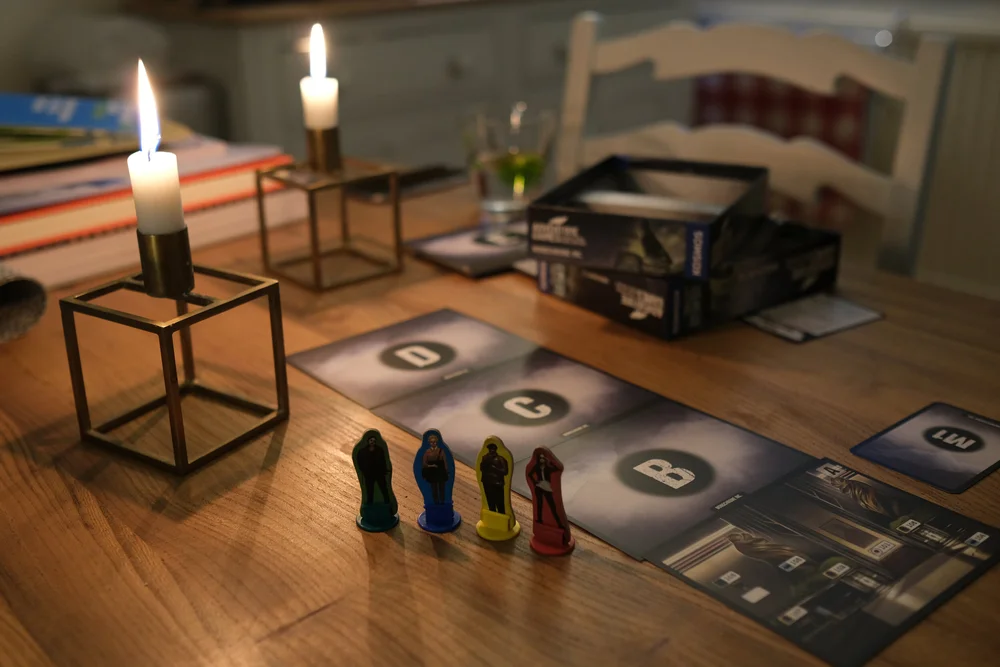
Adventure Games. Anyone who grew up loving ‘choose your own adventure’ books is pretty much guaranteed to enjoy the recently released Adventure Games series from the makers of the excellent EXIT escape room games. Adventure Games are fully cooperative and very much narrative-centred: each game begins with an introduction to the setting - perhaps you’re embarking on a mission to uncover the secrets of a shady corporation, say, or trapped in a cell in a medieval castle. Then, it’s up to you to decide what to do next: which locations to visit first and which details to investigate in order to piece together what’s happening. As with the EXIT games, the Adventure series is packed with interesting problems to solve, but this time you’re free to explore at your own pace with no time penalties. And, although you probably wouldn’t want to replay the same game once you know what happens, there’s no destruction of components as there is in the EXIT series, so you can pass the game on to a new set of adventurers once you’re done.
Forbidden Desert. Good news: you’ve made it out of lockdown and set off for a holiday in the sun! On the down side, your helicopter has crashed in the desert leaving you with limited water supplies and only one possible means of escape: finding and reassembling a legendary flying machine from parts lying scattered across the dunes. Using an innovative, ever shifting modular board to represent the storm-ravaged terrain you’re trapped in, Forbidden Desert is, in our opinion, one of the very best designs from the undisputed king of cooperative game design, Matt Leacock. As in his other titles (which include modern classic Pandemic), Forbidden Desert casts players as characters with specialist skills, who must work together to beat the game before time (or their limited supply of resources) runs out. With a range of difficulty levels beginning at moderately challenging, escaping the desert is never a walk in the park, and regardless of whether you succeed or fail, you’ll have been on quite the journey together.
Make something
Perhaps the very idea of travel is too depressing right now and you’d rather focus on doing something productive with the here and now. These games provide all the satisfaction of helping something build and grow… and (perhaps) of doing a better job of it than your partner!
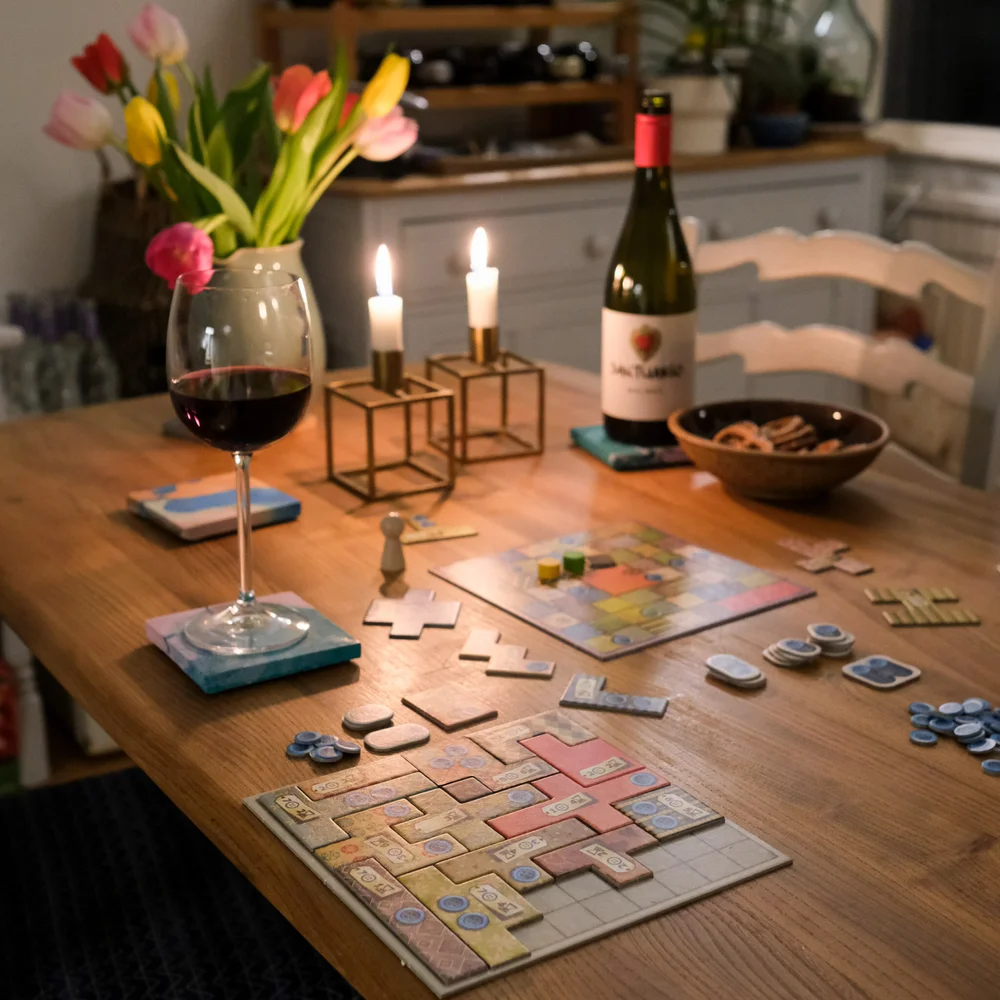
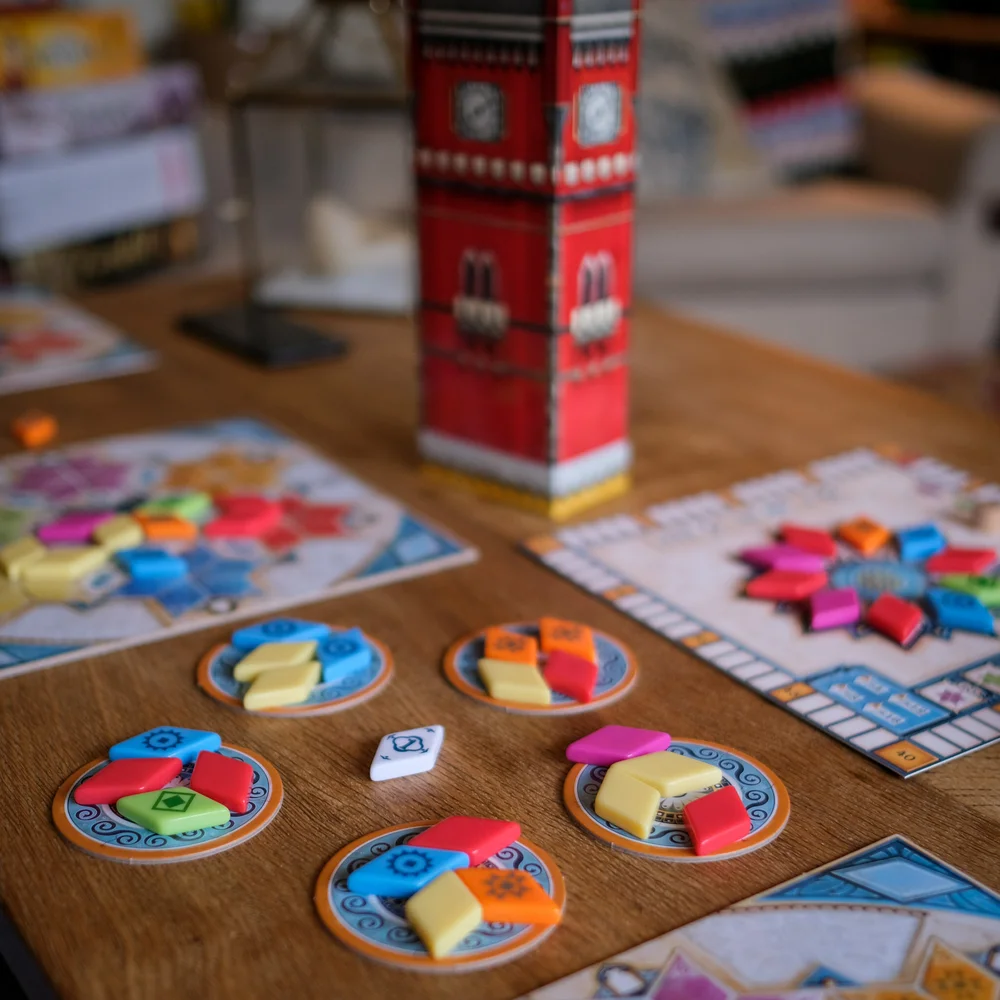
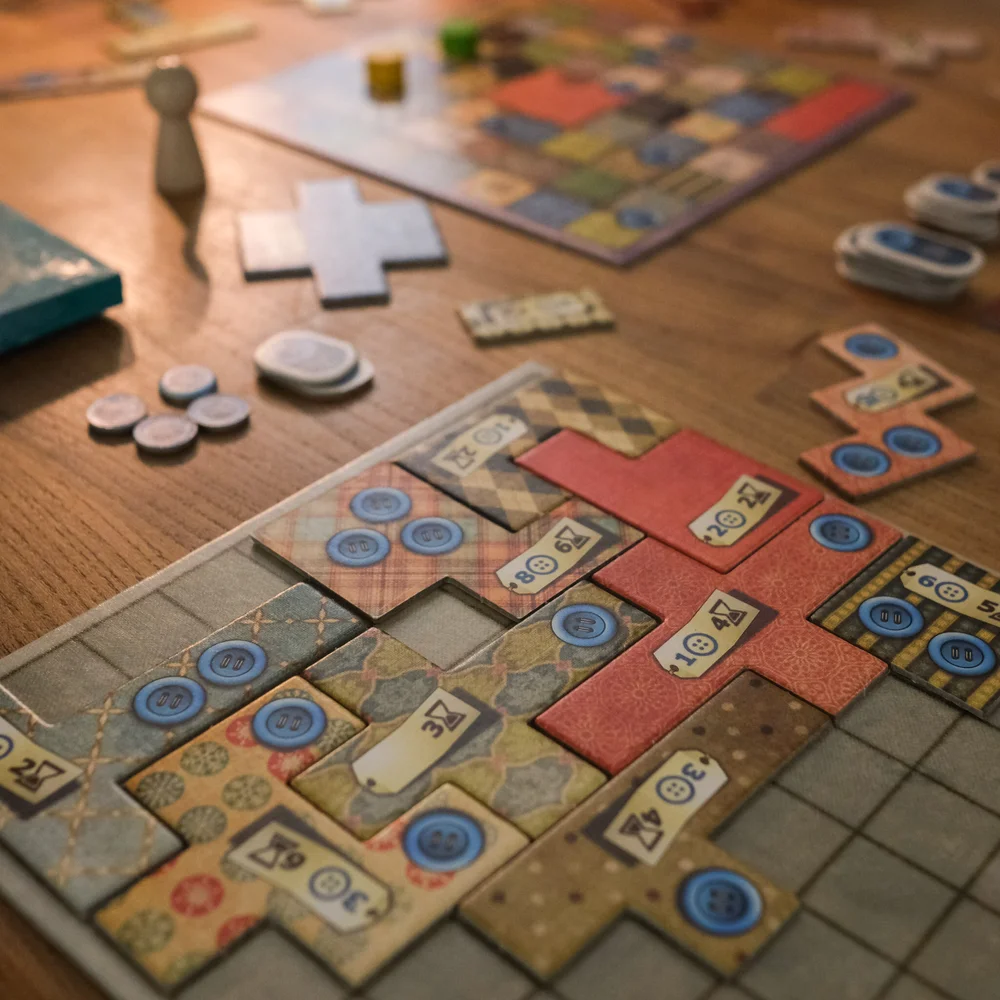
Patchwork. We can’t say for sure that Patchwork is the only game that’s ever been made about competitive quilting, but if there are others, we’ve certainly never heard of them! If you’re looking for a quick and charming game for two that’s simple enough to enjoy after a glass or two of wine but interesting enough to keep you coming back for more, you can’t do better than this. A perennial café favourite, Patchwork sees players competing to create the best quilt on individual player boards from deeply appealing tetronimo tiles, which will earn them points in the currency of buttons as the game progresses. It might sound cutesy, but there’s enough strategy involved that you’ll soon find yourself surprisingly invested, and the theme makes it the perfect choice for getting cosy with indoors.
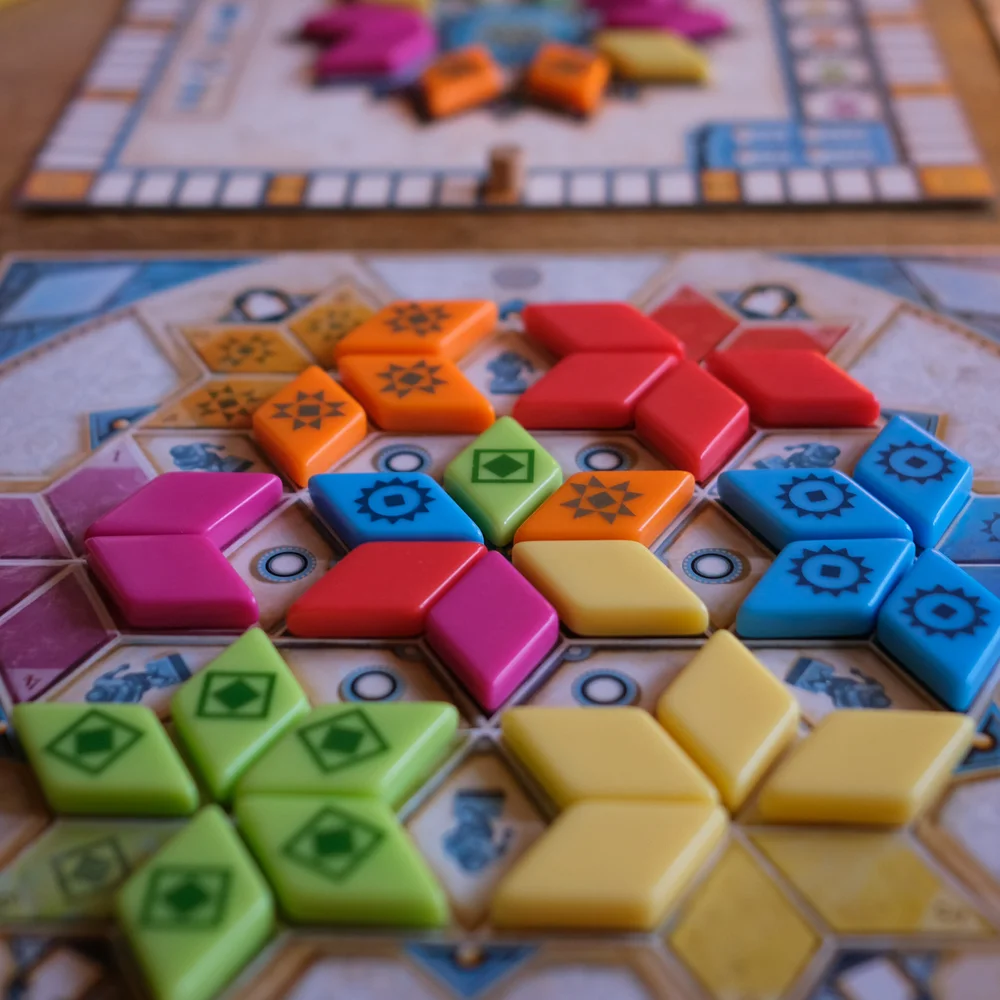
Azul. If you fancy on embarking on something more ambitious, how about an intricate tiling project to keep you out of mischief? There are now three separate titles in the Azul series, all of them accessible and visually stunning strategy games for two to four players. Whichever one you go for, you’ll be constructing a mosaic out of colourful plastic tiles, aiming to complete sections in order to score points and gain bonuses. All three games fall firmly under the ‘easy to learn, hard to master’ banner, with tricky decisions on every turn.
The original Azul is the simplest of the trio, offering gameplay which balances constructive strategy with opportunities for aggression: will you focus on what you want for your board, or arrange things so that another player has to lose points picking up tiles they can’t use? For all it’s bejewelled beauty, Stained Glass of Sintra quietly cranks up the options for nastiness, while Summer Pavilion more or less removes them (although you can still sneak in and pinch the tiles that someone else obviously has their eye on if you’re lucky!). All three are fabulous games with stacks of replayability which work wonderfully for two players - ideal lockdown entertainment!
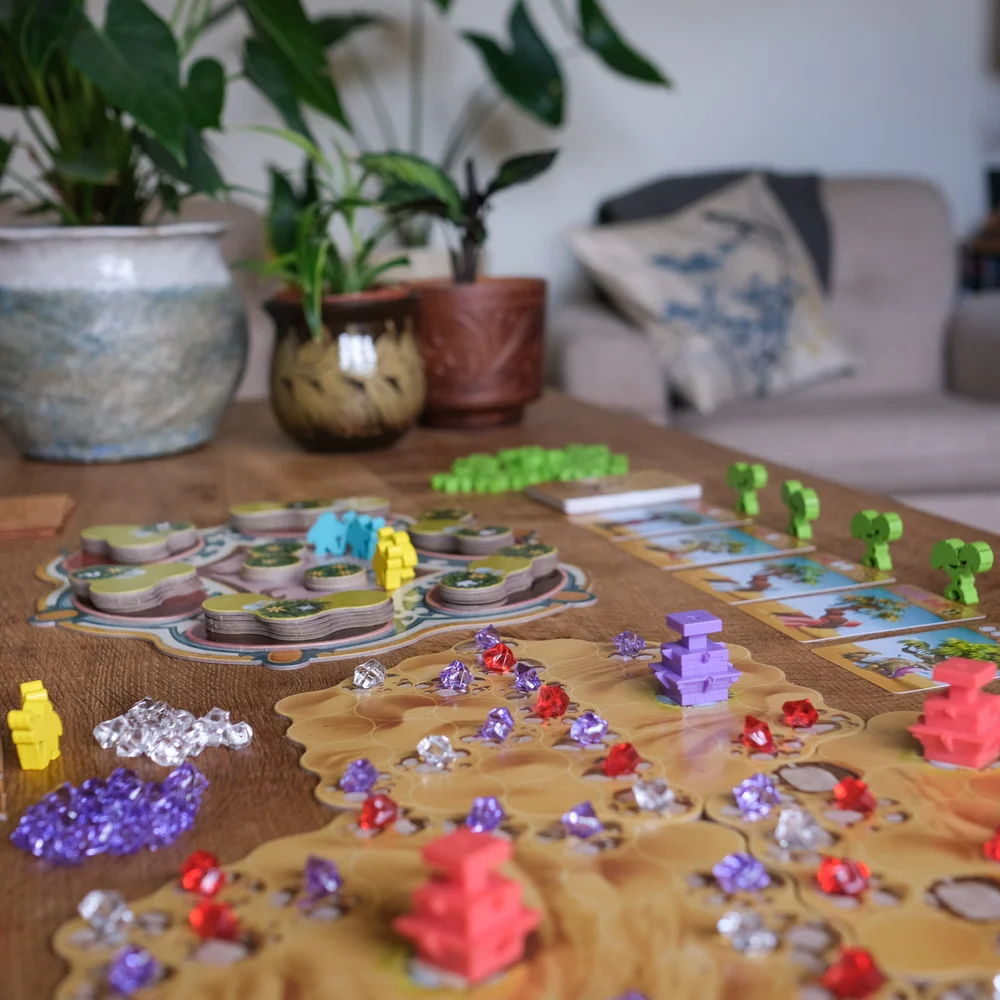
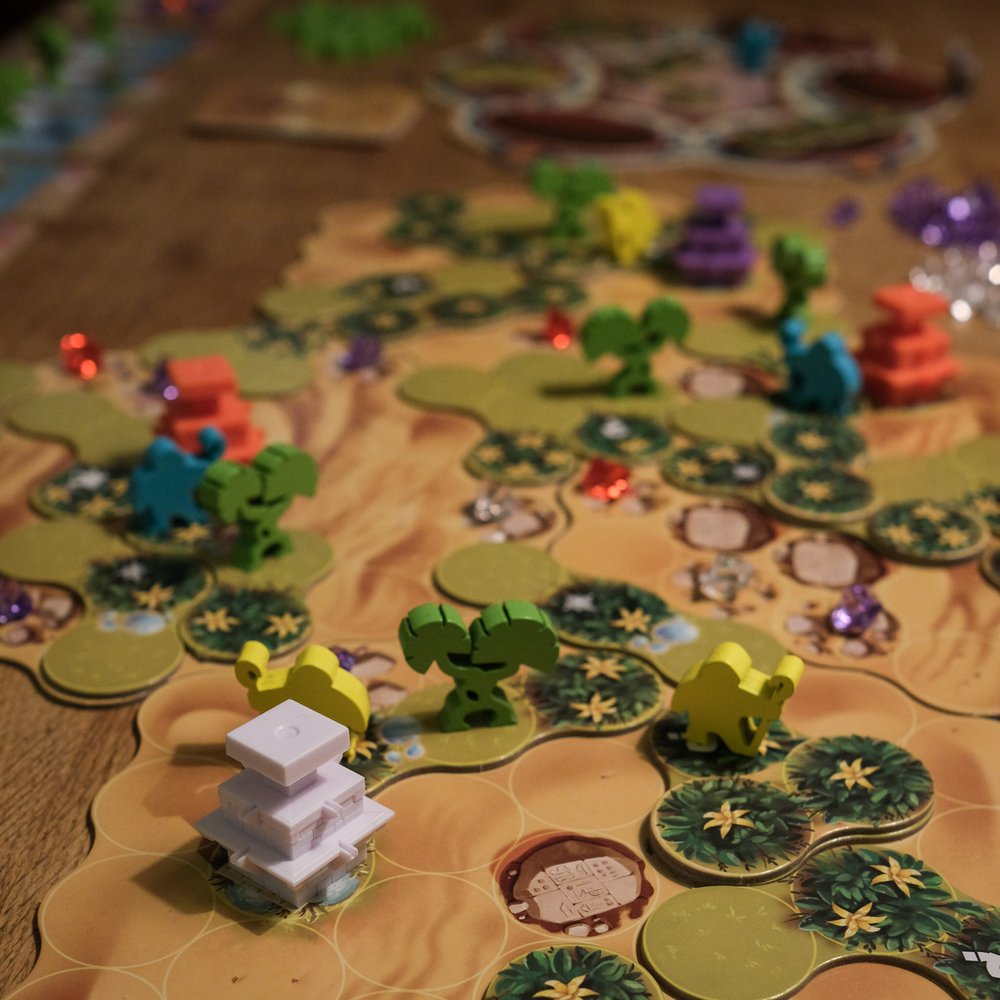
Ishtar. If you’d rather grow things than build or sew, how about taking on a task on a grander scale: transforming a barren desert into the Hanging Gardens of Babylon! Creation and transformation are inherently satisfying activities for most of us, a fact that many board game designs tap into, but few do this as delightfully as Ishtar. Placing lush green garden tiles and little wooden trees (treeples?) on top of empty brown desert must be one of the most satisfying tabletop transformations around, although admittedly being able to claim shiny gems while you’re at it doesn’t hurt either! Requiring both spatial and resource planning and absolutely packed with gorgeous components, Ishtar could be just what you need to satisfy those gardening urges until the arrival of Spring.
Connect psychically
Maybe what you’re craving isn’t escapism at all, but a way to engage with each other on a deeper level. These (potentially dangerous!) games encourage you to get right into each other’s heads… who knows what surprises you’ll find there?
A quick aside: both of the following games are really designed for larger groups, and I wouldn’t claim that two is the ideal player count for either. However, during lockdown we’ve all had to make our fun with what’s available, and we’ve had an enjoyable two-player time with both of these. Playing with just two makes them a lot less raucous and a little more intense, but arguably no less satisfying than the larger group version, and you’ll get to have a whole different type of fun with them once party days are here again!
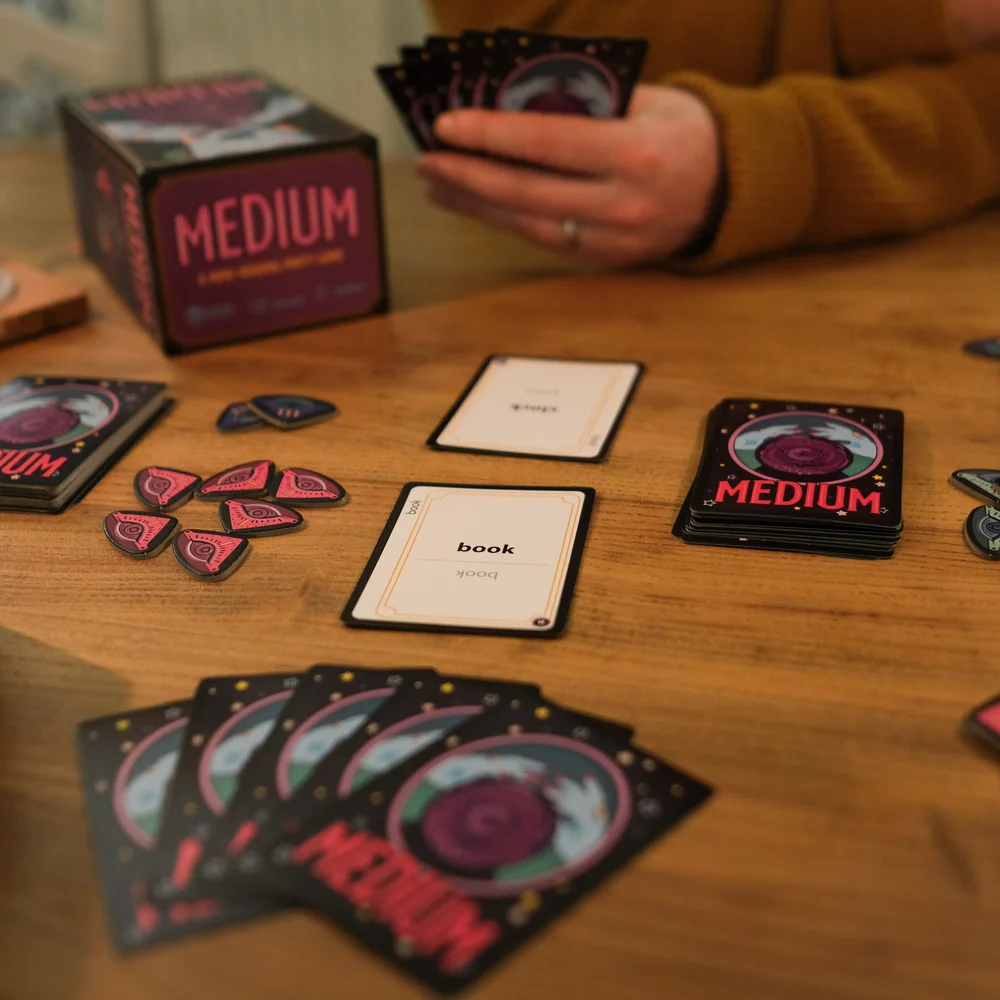
Medium. The first game in this weird but potentially wonderful category is Medium, in which players become mind readers trying to pluck words straight out of each other’s brains (not as gross as it sounds!). Each of you begins with a hand of word cards, and you take turns starting each round by choosing one to play face-up in the middle of the table. Then, the other player follows with a card from their hand, ideally one that they think creates an obvious connection with the word already chosen. You both count down from three then say the word that you think most directly links the two cards. If you both said the same word, great! You just scored the maximum points for the round. If not, you repeat the process up to twice more using the words you just said instead of the words on the card. This super-simple game has some genuine magic to it, and never more so than when you can look each other in the eye and just KNOW that you’re thinking the same thing!
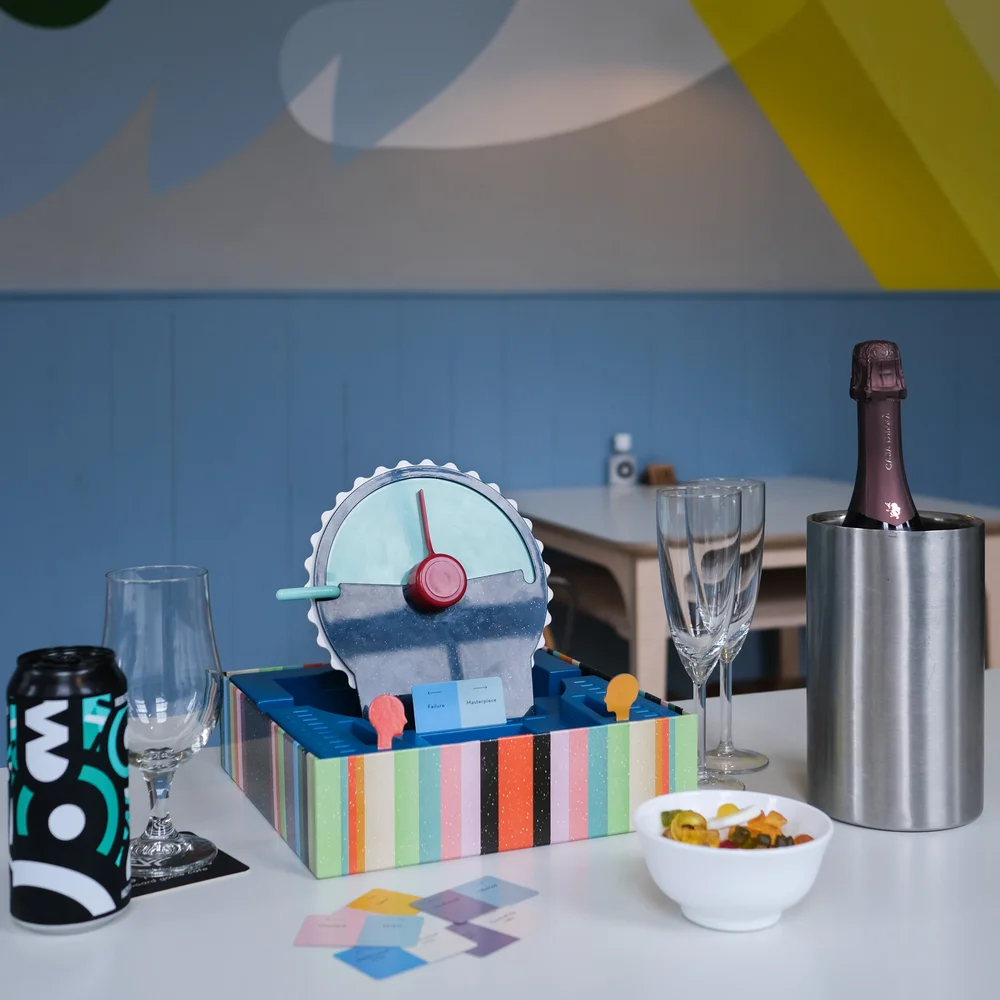
Wavelength. Ah, Wavelength. I’ve used a whole lot of words waxing lyrical about this phenomenal game since it became available to buy again recently, but I can always find a few more! Wavelength is remarkable in many ways: you can play it in team or cooperatively, by video link or in person, with a large group or with just two players. It’s simple to learn, has some of the coolest components around, and can get you thinking about things as strange and diverse as “who on the Treehouse team is the most Slytherin?”, “which colour does my sister think is the sexiest?” or “what is small but not tiny?”.
The rules of Wavelength are simple: the player whose turn it is to be clue-giver draws a card which defines a scale, e.g. famous to infamous, pointy animal to round animal, or nice smell to disgusting smell, and tells the other players what it is. Then, they spin the Wavelength Wheel of Wonder* (*not its real name) and take a peak behind the snazzy turquoise screen to find out where on the scale the target has landed, without showing the other players. They then concoct their clue, which can be whatever they like as long as it’s not too complex, to help their team mates (or all other players in the cooperative version) to guess where the target is by adjusting the red needle. Once the decision is made, the screen slides back to show the answer, and points are awarded if the needle is within the target area. It might sound a little abstract without the game in front of you, but as soon as you’ve got to grips with the (literal) mechanics of the wheel, all will become clear!
A small safety note to finish: with just two players, we’ve found that this game can go one of two ways: either you’re so wondrously in sync that you become increasingly thrilled at your collective cleverness, or… you’re so at odds that you begin to wonder how you’re even friends. In the event that you find yourself in the latter scenario, don’t panic - treat it as a conversation starter and explore how you got there, and you’re bound to find out something about each other that you didn’t know before!