

Fresco Game Review
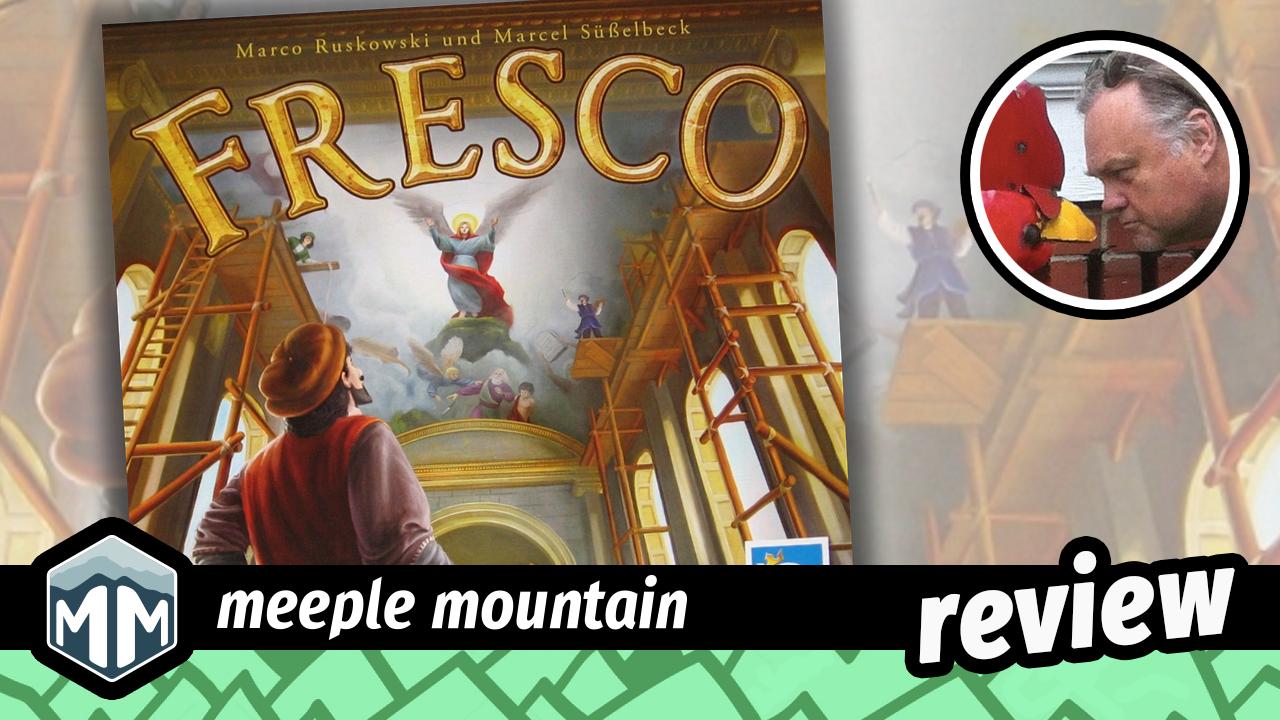
Frescoes, or watercolor paintings over plaster, date back to ancient Egypt, Rome, and Greece. Perhaps the best-known fresco is the ceiling of the Sistine Chapel in Rome. Micelangelo’s masterpiece is an example of Buno Fresco, or “True Fresco”, process. Before beginning work, the artist applies a rough plaster layer. Once in position (high above the ground, on his back) the painter would apply another, finer wet plaster layer. Then, working quickly before this new layer dried, he applied the pigments. In this way, the colors became a permanent part of the plaster.
To create such grand works, the painter prepared only as much plaster and pigments as he could use each day. This meant working in small sections, or giornata, meaning “a day's work”. The size of a giornata varied based on the complexity, both in design and colors of the scene depicted.
Over the centuries, the Sistine Chapel fresco darkened and was damaged by environmental elements. Whenever cleanup and repairs took place, fresco repair specialists did so, giornata by giornata.
In Marco Ruskowski and Marcel Süßelbeck’s 2010 release Fresco (Queen Games), the Bishop has summoned you and your fellow players to repair the church’s prized fresco. Be the artist to best manage your workers, create the greatest selection of pigments, and repair the right giornata, and the…
The post Fresco Game Review appeared first on Meeple Mountain.