

Meet The Northern Wei: A Civilization of GMT’s Ancient Civilizations of East Asia
By Mark McLaughlin & Fred Schachter
Hopefully, this series is engendering your interest and enthusiasm regarding this third offering of the “Ancient Civs” Series: Ancient Civilizations of East Asia. Here’s another glimpse into one of the game’s nineteen Civilizations: The Northern Wei.
The Northern Wei (often referred to by historians as the “Northern Dynasty”) trace their lineage back to the nomads of the steppes. The Northern Wei drew upon that horse culture to build armies of powerful, fast-moving, hard-hitting cavalry. As they gained domination over northern China, however, they turned towards consolidating their gains through becoming a traditional Chinese imperial dynasty.

Figure 1: Artifacts of a Northern Wei Cavalryman and Infantryman
This included constructing over 950 kilometers of fortifications, a defensive line that laid the foundations for what would later become known as the renown Great Wall of China.
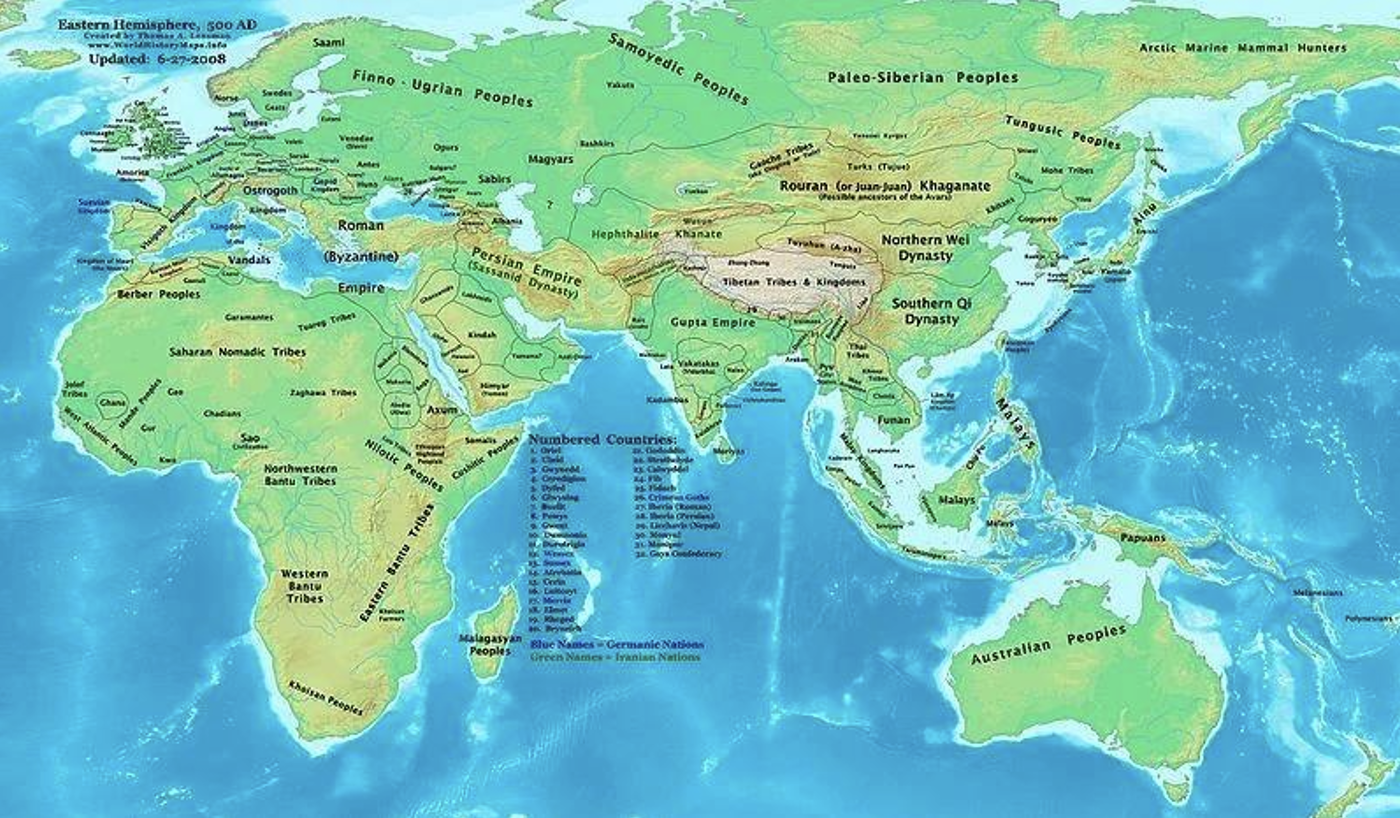
Figure 2: A Map of the Ancient World circa 500 A.D. showing the Northern Wei Dynasty within East Asia’s context. Readers may notice how this map includes the board areas of the first two games of GMT’s “Ancient Civs.” Series: ACIS – GMT Games – Ancient Civilizations of the Inner Sea and ACME – GMT Games – Ancient Civilizations of the Middle East.
For those interested in learning more about The Northern Wei, please reference: What was the Northern Wei dynasty? – World History Edu as well as this YouTube 12 Minute Video Rise of the Northern Wei Dynasty: Tuoba Gui’s Epic Empire in 4th Century China and another under five minute video: Heirs of the Xiongnu: The Northern Wei. Regarding the Xiongnu, an ACEA Nomad Civilization, see: Meet the Xiongnu: A Civilization of GMT’s Ancient Civilizations of East Asia – InsideGMT.

Figure 3: ACEA’s Civilization Display for The Northern Wei: This format should be familiar to those who’ve played either of the other two of GMT’s “Ancient Civs.” Series: Ancient Civilizations of the Inner SeaGMT Games – Ancient Civilizations of the Inner Sea and/or Ancient Civilizations of the Middle East GMT Games – Ancient Civilizations of the Middle East. For more information, see these games’ referenced GMT Sites for their Rulebooks & other game material.
The Northern Wei’s powerful cavalry are represented by their “Access to Horse Traders of the Steppes,” a trait that allows them to add a white disk to each of two separate Competitions in non-Mountain Areas. This gives them a temporary advantage in up to two Competitions per turn.
Consequently, for an aggressively minded gamer this is a fine benefit to have, particularly when combined with advances on the ACEA Cultural Development Track Display‘s Military-Political Track. Get the Northern Wei’s marker to that Track’s Level Four to gain two more white disks each to influence two Competitions and those disks can be placed in Mountain Areas… the power, oh the power! For more regarding this Ancient Civilizations of East Asia game feature, see: An Overview of Ancient Civilizations of East Asia’s Cultural Development Tracks – InsideGMT
The Northern Wei, however, can forgo that advantage in Competition by instead invoking their “Wall Builders” power to build a Stronghold free of charge in a non-Mountain area under its control. This decision, however, is made at the beginning of ACEA’s Stronghold Step, and by doing so they tell the other players that they are prioritizing defense over offense this turn. Conversely, by foregoing the free Stronghold they could well be indicating that these horse lords are getting ready to ride into battle.
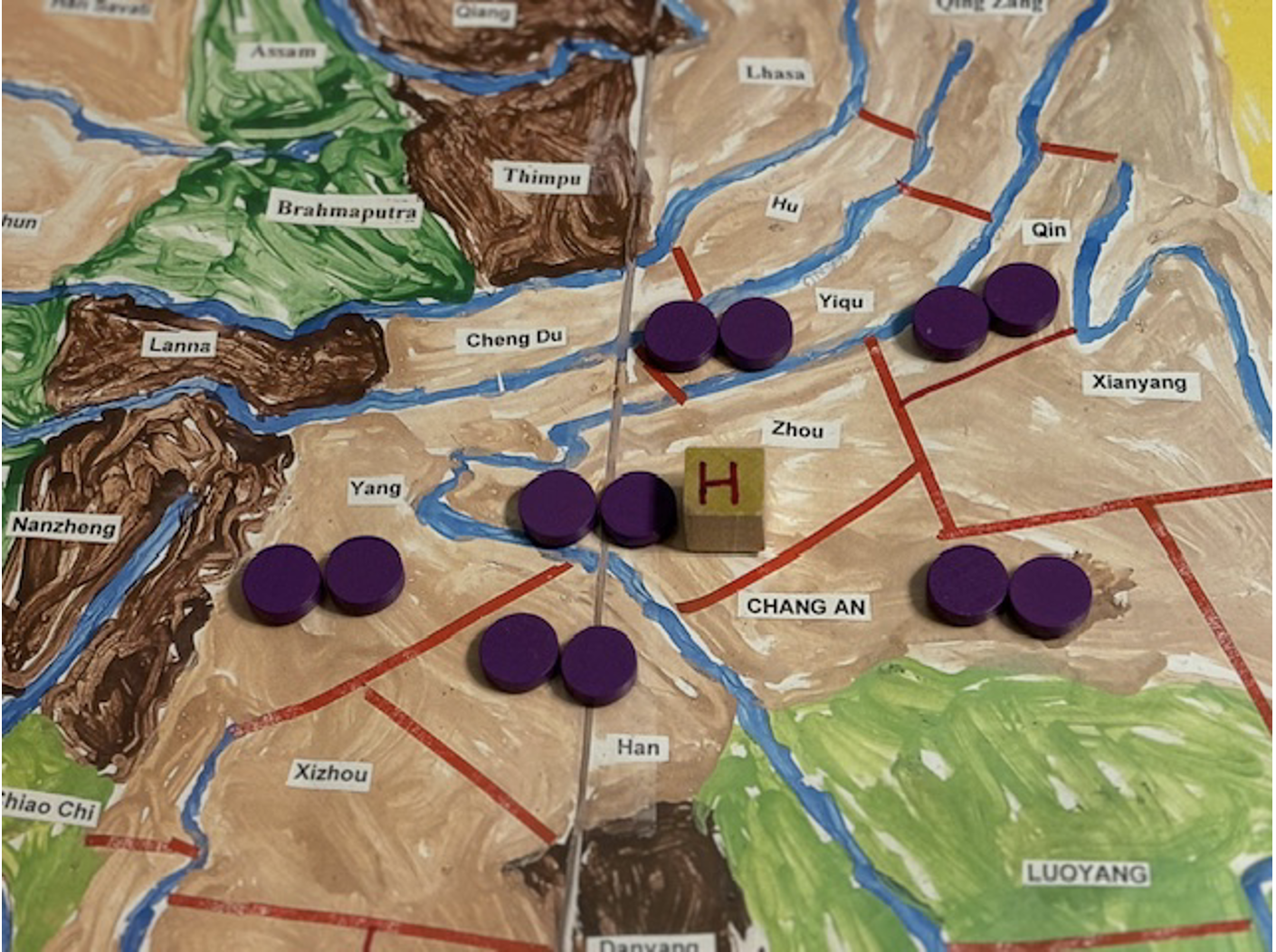
Figure 4: Northern Wei’s initial placement of disks on ACEA’s playtest map: The “H” small wooden block indicates the Standard Game’s Northern Wei Zhou Homeland. The produced game’s components will be similar to ACME’s Homeland Blocks.
When considering this initial placement area within the context of the overall gameboard (See Figure 5 below.), the potential advantages, opportunities, and challenges for a Northern Wei player become apparent.
Opportunities: From their initial placement areas, the Northern Wei are but short distances away to expand to the western map edge, move north to abut the Silk Road with its potential monetary (tael) awards, south into Southeast Asia, and most tempting of all, east to occupy as many as possible of the Chinese heartland’s rich Fertile areas. Ah the victory points which can be accrued from such!
Challenges: As there’ll be one or more, up to five other Civilizations on the ACEA map for a game, threats to the Northern Wei could come from any compass direction. Successful expansion from its home areas, particularly south or east, will paint an increasingly attention-getting target on a Northern Wei player’s back. This includes having various Barbarian (Black disk) Must Play Event Invasions flung against its areas. Persuasive diplomacy, ACEA Cultural Development Display Military-Political Track advances, and, when not actively engaging in warfare, taking advantage of that free Stronghold available each turn via its “Wall Builders” Civilization trait could make an aggressor, or aggressors, think twice.
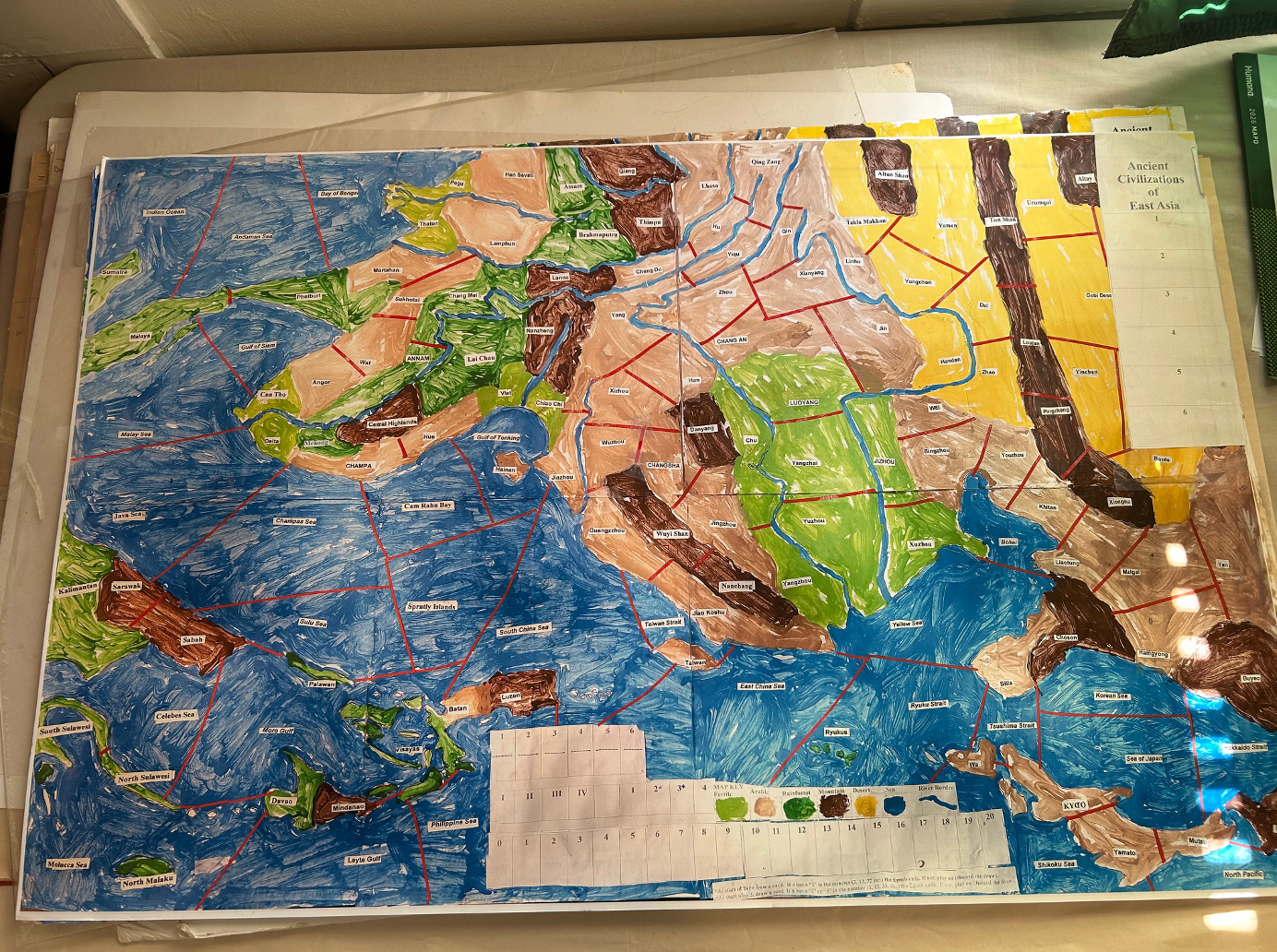
Figure 5: The Ancient Civilizations of East Asia Playtest Map: The central positioning of the Northern Wei Homeland in Zhou offers a number of expansionist possibilities and potential dangers to contend with.
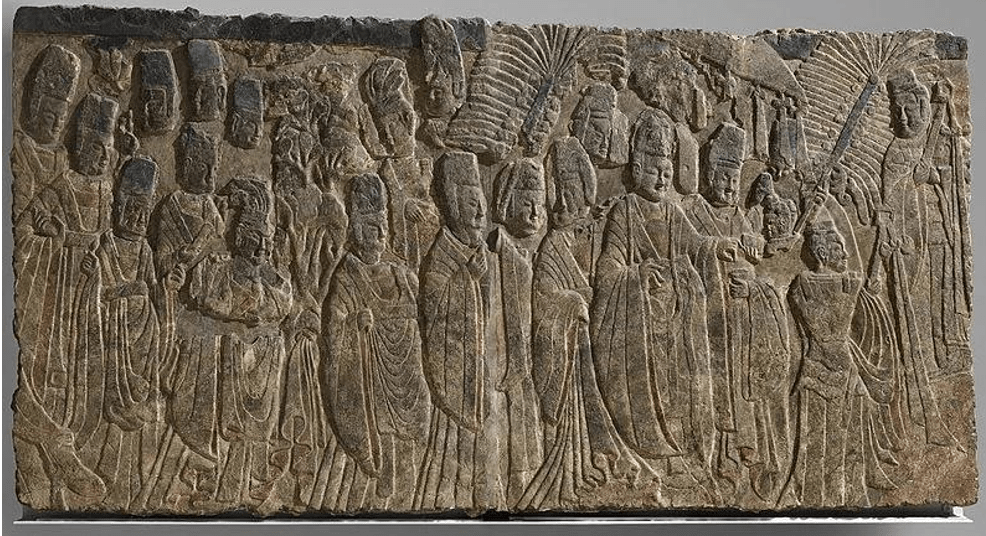
Figure 6: Northern Wei Emperor Xiaowen paying tribute to Buddha.
Next up in this “Meet the Civs” Series, we present the Civilization which incepted the first of Ancient China’s emperors…
the mighty Qin Civilization! (Yes, for those sufficiently seasoned to remember, that “mighty Qin” reference, albeit having nothing to do with Ancient East Asia, is a deliberate pun the authors couldn’t resist.)