

When does school start again? Games for keeping kids entertained through the ‘end of summer slump’
OK parents and carers, it's the final countdown! (Doodoodoodoooooo! DoodooDOOTdoodoo…) It's the last gasp of the holidays before kids head back to their day jobs. This means that, depending on how your summer's gone, either this is the last time you'll have to desperately suggest something that might occupy them, or it's the last chance you'll get to hang out with them for an extended time before half term. Either way, it’s Chella here from Team Treehouse to recommend a few 'sure to please' games for different age groups to end the season with a bang, not a fizzle. For a literal bang, see last month’s post which features Hanabi, a firework-themed cooperative game. For more ideas on adding kid-friendly gaming to your bank holiday weekend, read on!
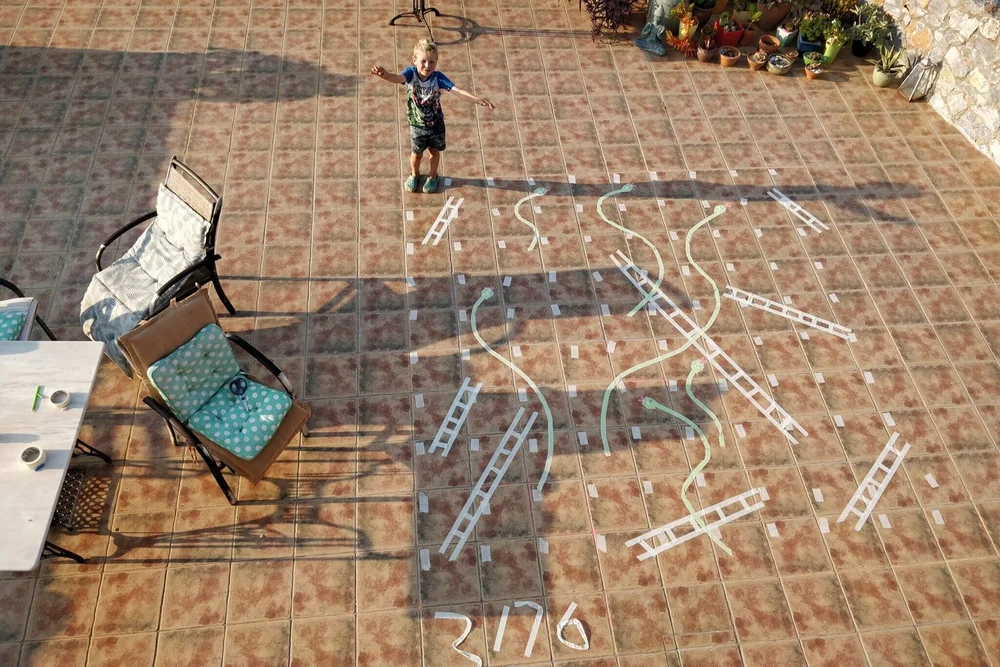
Bored but no board? No problem! Kudos to fellow board gamer Paul Ellingham and family for showing us how to make life-sized Snakes and Ladders using only masking tape and a patio made of pavers! Photo credit: Paul Ellingham
When I was a kid and it was game night, I was content to play quietly with the spare pieces of games that the big kids and grownups were playing. After all, some of those pieces looked like toys in their own right. But I eventually started to really get into board games. I am proud to say my nephew is exactly the same, and his current obsession is Snakes and Ladders (or Chutes and Ladders as it is called in the US).
As you may already know, this well-known game is made up of a 10 by 10 grid numbered from 1 - 100. Players travel from square to square, unless they land on a snake or a ladder which allows them to skip portions of the board to either reach their goal more quickly or be sent back to an earlier point in the game. Some of the reasons my nephew loves it are because he learnt how to count to 100 this year and he really enjoys reading out the numbers on the game board. He also enjoys the risk and reward that’s determined by the result of moves you can make using the spinner (which is harder to lose and less swallowable than dice). He also seems to really delight in the schadenfreude of watching as other players’ fortunes are reversed. And to be fair, I’ve even been able to play it with him over Zoom a few times and it is still a moment to relish when you land on that enormously tall ladder in the first row, just as it’s still horrifying to realise you are about to land on that massive drop just as the finish line is in sight. The UK version adds the slightly scarier element of sliding down live snakes into the mix. I have to admit the losses in Chutes and Ladders, by comparison, didn’t seem so bad: it’s not as much of a punishment to get to slide down a really big slide as it is to contend with live snakes. Many companies sell this game, and you can even make your own board. As you can see in the photo shared by fellow gamer Paul Ellingham, you can even make a life-sized version of the game with a bit of sidewalk chalk or, as his family did, masking tape (bonus if you already have square paving!). Paul explained that the 3/76 notation below represents the age range of three generations of players enjoying the game as a family.
But not everyone has the time or inclination to make their own fun, and a lot of games suitable for kids have been invented since Snakes and Ladders came about. So here are a few ideas for newer games to try in the last days of summer.
A game for teens
The oldest kids are often the hardest to please or, depending on how many friends have joined them or how many electronic devices are holding their attention, they are the most difficult group to get to agree on any one game. It can also be hard when you’re with extended family to get your ‘big kid’ to ignore the draws of consoles and mobile phone-based activities to sit in a grandparent’s conservatory long enough to join in.
Telestrations is a popular game at The Treehouse for all ages old enough to draw, and is particularly great for providing what I like to call ‘entertaining confusion’. In this game, each player is asked to draw a secret word or phrase that must be secretly guessed by the next player. So far, so Pictionary, right? But then things get weird. The next person can only see the guess, not the drawing, and they are asked to attempt to draw as if the guess were the clue. This happens on and on around the table (for groups up to 8, or 12 with the extended edition) which descends into its own special chaos, until players have a gallery of slightly to extremely wrong answers and drawings to reveal. The group is usually as delighted with wrong answers that veer wildly from the starting clue as they are awed when the final result on the last dry erase board closely matches the first drawing in that set. There is scoring, but it isn’t really necessary, and you can adjust the time limit per round to help or hurt the players.
Be aware that unlike this version, Telestrations after Dark and a similarly styled game called Scrawl have clues that are not child-friendly (and not safe for work either). But the mental (or digital!) images you can share of the starting image and final image, and the opportunity to show off both wonderful and terrible drawing skills with equal amounts of pride are the kind of thing that brings a group of teens together… and also back into the family fold for a memorable evening.
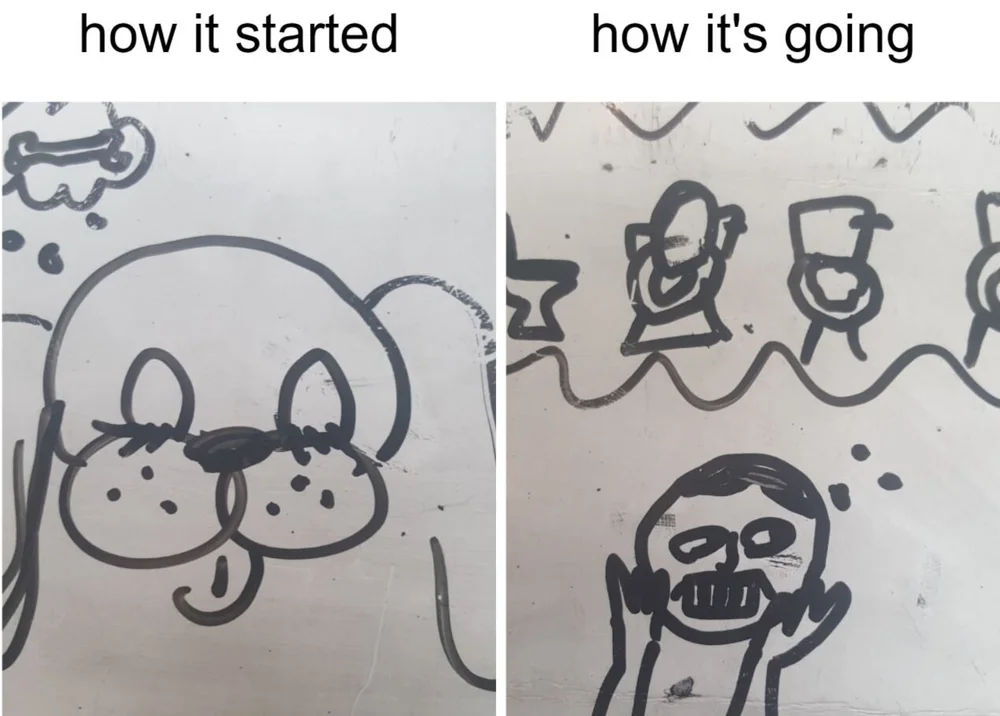
A round of Telestrations gone horribly wrong, which only adds to the fun. Be warned though: even the ‘clean’ version of this game can quickly descend into potty humour. Image credit: The artists wish to remain anonymous.
A game for ages 10+
For older kids, things like escape rooms and puzzle games become a whole lot more fun as their deductive reasoning skills develop (although they may not put together why they are so exhausted the next morning after insisting on staying up too late for a few years yet). Exit the Game (for one to four players) is pretty darn fabulous and many of the ‘escape-room-in-a-box’ games in this series are suitable for age 10+ and 12+ (although a few of the horror titles are rated older, so please read spoiler-free reviews to determine what’s right for your child). I recommend The Sunken Treasure as a good first one to try if there are young people in your party - the puzzles and theme are suited to this age group and are a nice start to the series, which has some more difficult puzzles (and scarier topics) in other editions.
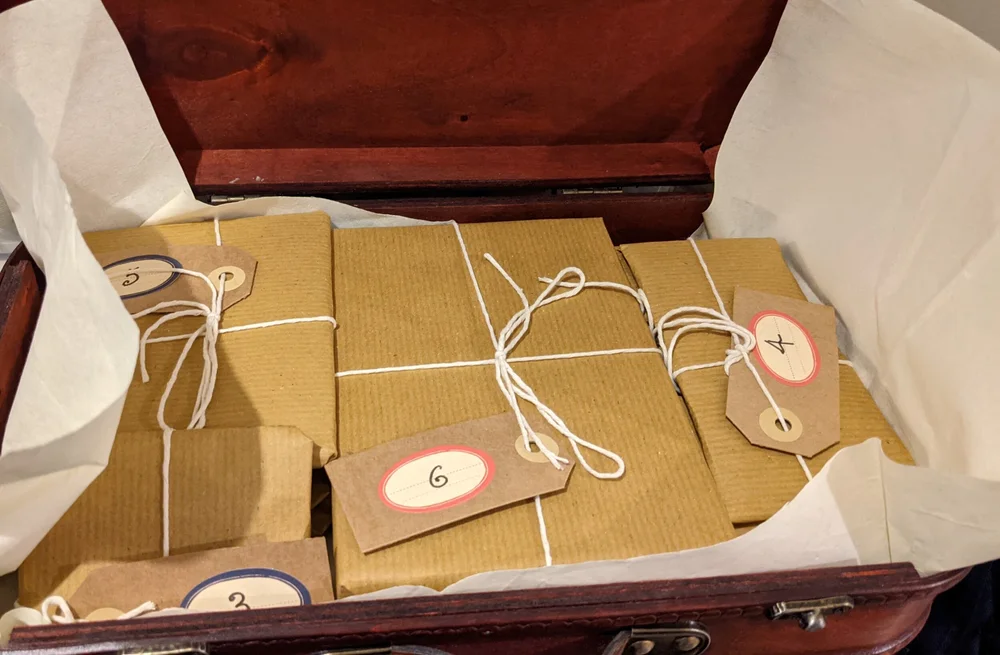
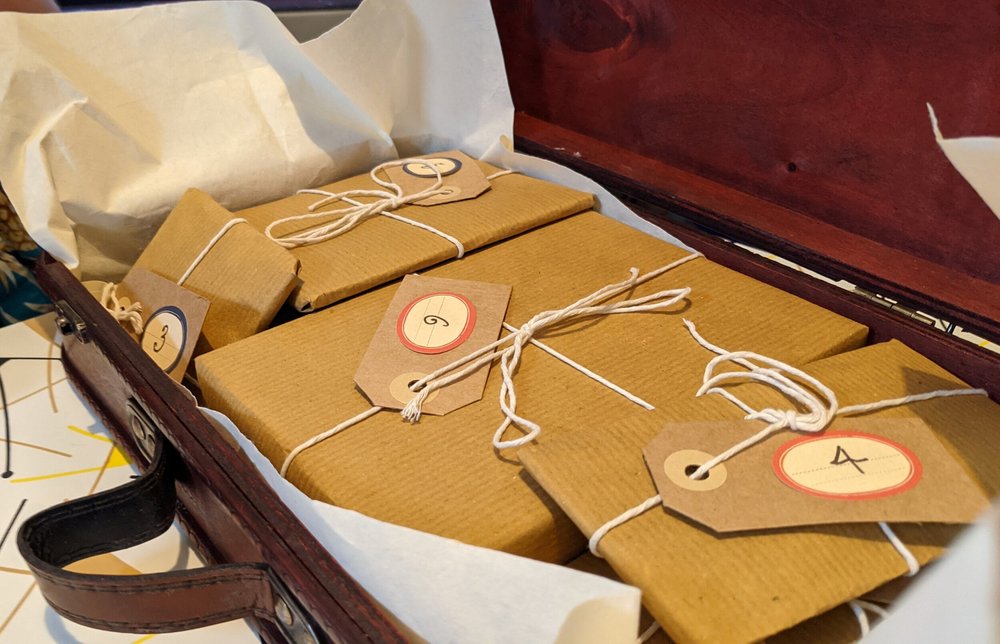
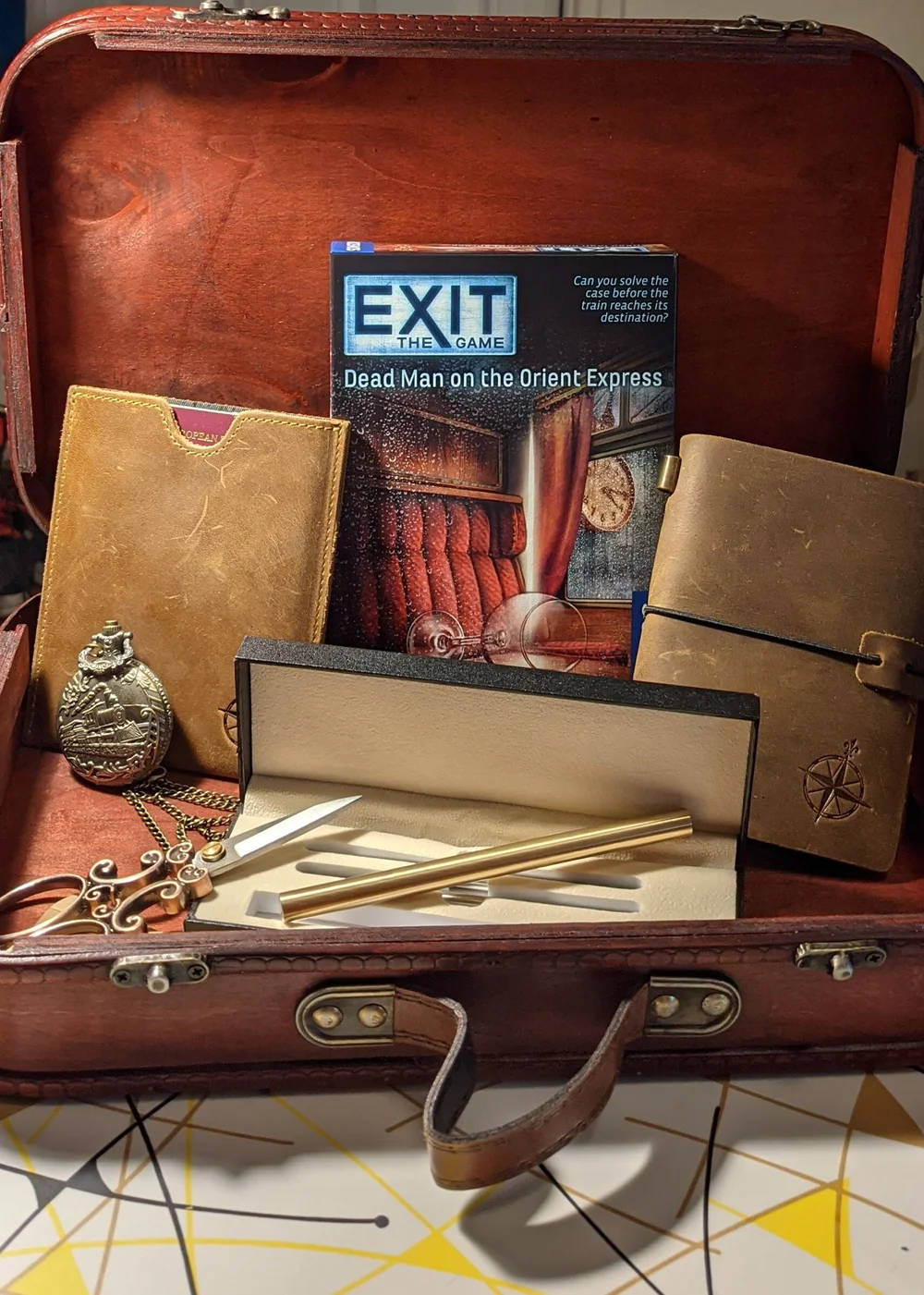
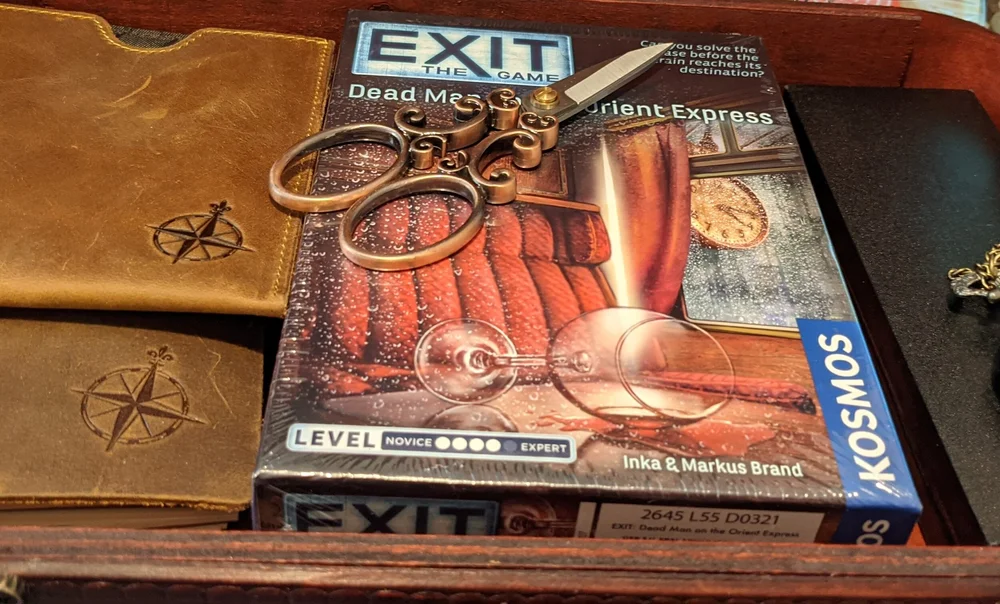
The way it works is similar to an escape room in real life - a series of clues and observations are put together to reveal code numbers that help unlock further locked rooms or items, until the escape is made, the treasure is uncovered, or the culprit is caught. The difference is, you can play this at home, it’s a lot cheaper, and you can even add your own accoutrements like themed props, a topical meal, or, if it’s a present, additional gifts that fit the story. I recently did this with their Orient Express themed game, and added a big band playlist, background train carriage image to display on the screen behind us, and a vintage suitcase of stylish versions of the materials you need to provide to play: pen, paper, a watch, and scissors. Wrapped and numbered, I was able to turn the present itself into a bit of a ‘starter puzzle’ and it went down a treat. The only thing I found hard to orchestrate was a believable train soundtrack to play in the background, but was delighted to discover that the Exit series has an accompanying app with a timer and ambient sounds for each game!
The games can only be played once, by the way. Cards and other playing pieces get drawn on, cut up, folded and thrown away at different stages. They are all recyclable, though, and production values, design, and attention to detail are quite high: these games come in a small box, and there’s not a lot of paper waste. The whole experience my first time was incredibly fun, and I will definitely be getting another one - it felt like a real occasion and the solution was satisfying.
A very silly game for primary school aged children
For kids ages 6+ it starts to get fun for gamer parents to introduce them to either simplified versions of adult games or strategy games aimed at younger children. The mechanics of games designed for school kids start to look like the mechanics of the games we play and I have plenty of friends whose kids actually started playing quite sophisticaed games in primary school. That being said, there are some great games for this age group that are incredibly good for using up unspent energy or playing in a big family group if you are seeing relatives for the first time in a long time. Happy Salmon is one of them.
Happy Salmon is a ridiculous game. It is a set of cards that comes zipped up inside a pudgy neoprene fish bag, and that is almost all you need to know but not quite. There are six suits of cards in the deck separated by colour. Each suit includes the same cards, and on each card is both a written and picture instruction for some sort of activity or greeting. Each player is dealt one suit and the game works best when five or six people play. By ‘best’ I mean most frenetically and chaotically. Everyone should stand in a circle (usually around a table, although that isn’t necessary as long as people can remember what position they were in round the circle). Each player shuffles their cards without looking, and then the game begins as everyone turns over their own hand with only one card visible. Then, each player has to find a partner with the same card as them. Doing the action together ‘clears’ that card and they can each move on to their next cards. Because everyone's hand is revealed in a different order, some people will be left hanging and have to shout out what’s on their card until they find a partner to match with. The object of the game is to be the first person to clear all of your cards.
The instant, full-volume shouting is only part of what makes this game ridiculous: it is not for the easily mortified! The card actions are as follows: High five, Pound it (which is a fist bump), Happy Salmon (which involves flapping your hand across someone else's back and forth several times as though you are both floppy fish) and Switcheroo (which means swapping places with someone else around the table or circle). At the end of the game, which only takes a couple of minutes, those who are not still in shock at the volume or pace tend to be very keen to wade through the jumble of cards thrown into the middle of the table, deal them out, and start again, over and over, until everyone is tired. The whole café becomes immediately aware of it when a group is playing this game at the Treehouse, so you may need to be selective about when it’s played and if anyone in your household needs quiet time. It’s an absolutely outstanding way to exhaust people who have too much energy, but no promises that anyone will be able to go to bed directly afterward.
(Ok, ok, that’s my vote for a silly game. If you are still keen to introduce your less boisterous brood to slightly less shouting, gentle strategy, or a bit of tranquility, I recommend When I Dream, Dixit, and Patchwork.
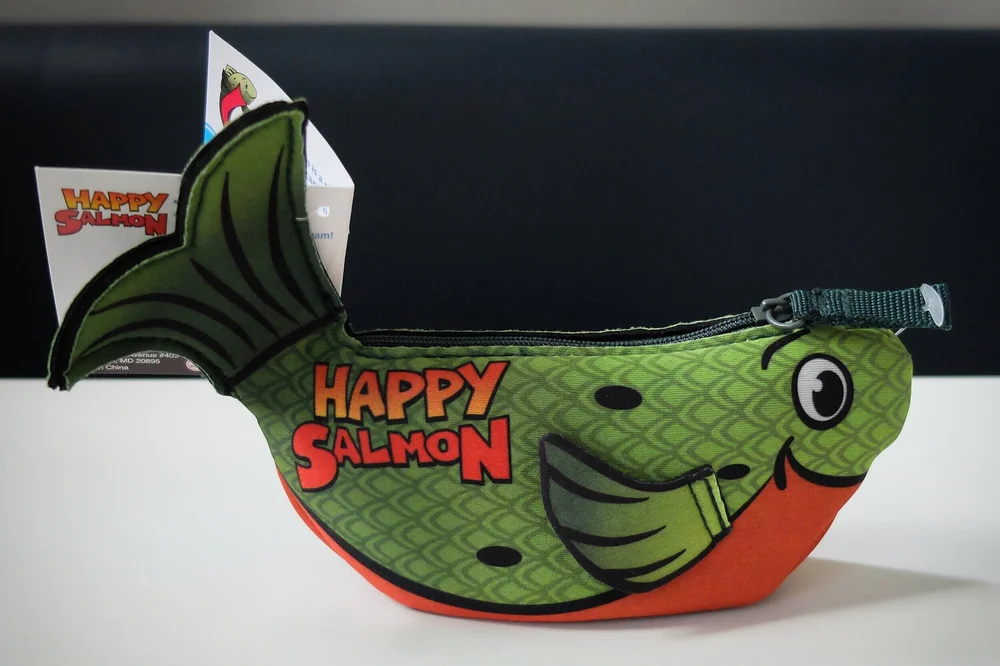
Happy Salmon: even its packaging is ridiculous.
A game for kids just starting school
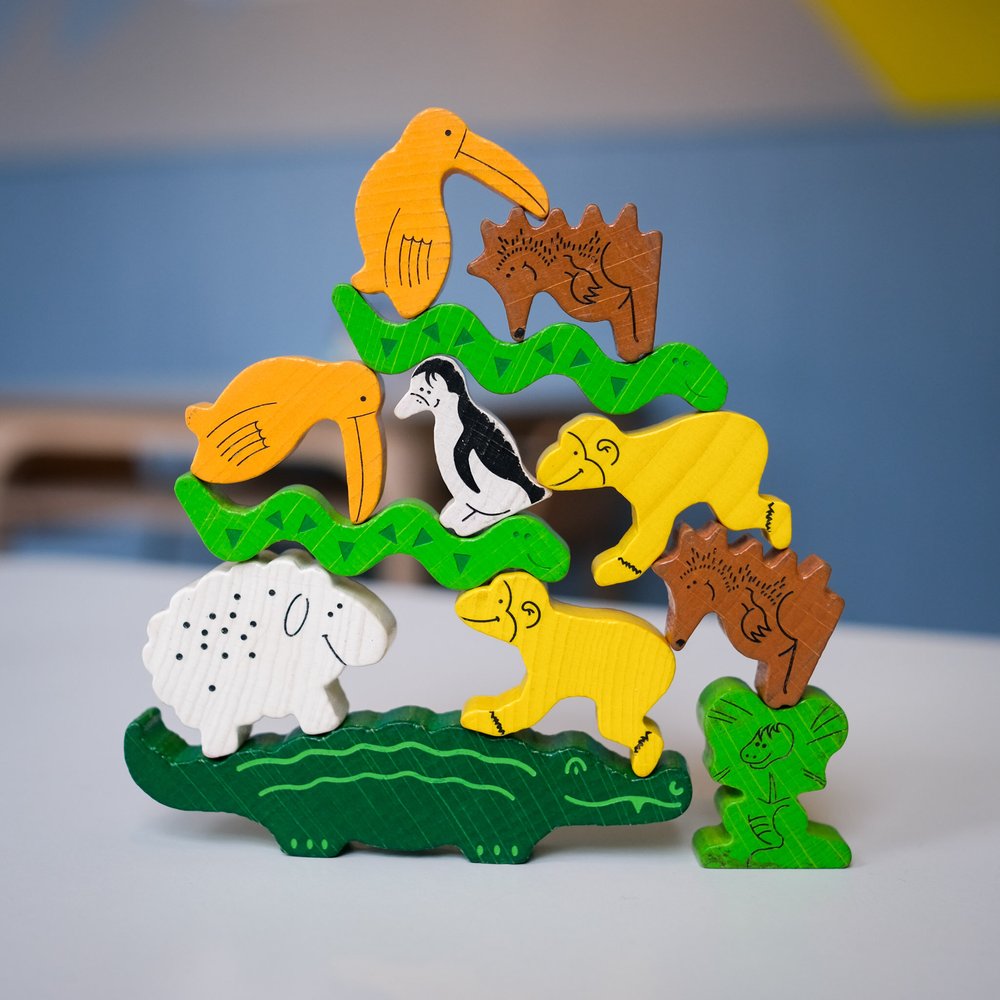
If you can’t get hold of the English version, don’t worry! There is no language in the game, so Tier auf Tier or Pyramide des Animaux are just as great, no German or French language skills required!
Animal Upon Animal is fun for all ages including adults but is particularly popular with the four- to six-year-old crowd. In this game from Haba for 2-4 players, you compete to see who can stack all of your animals first. The stack you are building is shared (the French name of this game, ‘Pyramids Des Animaux’ may offer a better visual of what happens as the game progresses), which means you don’t have the luxury of setting up sturdy balancing positions for yourself. Everyone is dealt a hand of adorable wooden animal-shaped blocks. A crocodile block is placed in the center of the table and players take turns rolling the die and following the instructions.
The instructions on the die are really quite ingenious for moving the game along in clever ways. You may be instructed to place one animal on top of the crocodile's back, or you might see two animals on the die, meaning you have to place one after another. You can also be asked to give one of your pieces to someone else to place or have the other players choose which of your animals to place next (and they will invariably select one that is harder to balance). The final option is a picture of a crocodile, which means you can extend the base block to have a larger area to balance animals upon.
The reason I think this game is particularly enjoyable for younger children starting school especially is because even if you make the tower fall, you don’t lose and the game doesn’t end. The maximum penalty if more than two fall off the pile is that you take two animals back into your hand and continue playing. This keeps the focus on dexterity, strategy, and making stacks of cute animals, and nicely swerves siblings blaming each other for quote ‘ruining the game’ or a fear of failure at a time when there are a lot of new expectations. (OK, I clearly have some some childhood Jenga tower collapse issues to explore but never mind that now). Haba games are great generally for this age group. Dragon’s Breath is another lovely Haba game that fans of Animal Upon Animal may enjoy.
Games for very little ones
And finally, even if they’re not ready for big school yet, that doesn’t mean they aren’t ready for gaming (some of my friends’ toddlers have attempted to prove this by taking out every game on the lowest shelf ready to play...).
At this age, the focus for parents choosing games is about two things, really - replayability, and doing something that looks like what the big kids are doing, so the big kids’ game doesn’t get wrecked (for example, my three-year-old niece recently ripped the Candyland board clean in half, in the most impressive WWE style rage quit I’ve heard about in years. It would have been more impressive, I suppose, if I hadn’t been the one who bought it for her and if it hadn’t been my favourite game when I was her age. I hope she is not still doing that when she’s 30, but it was epic nonetheless).
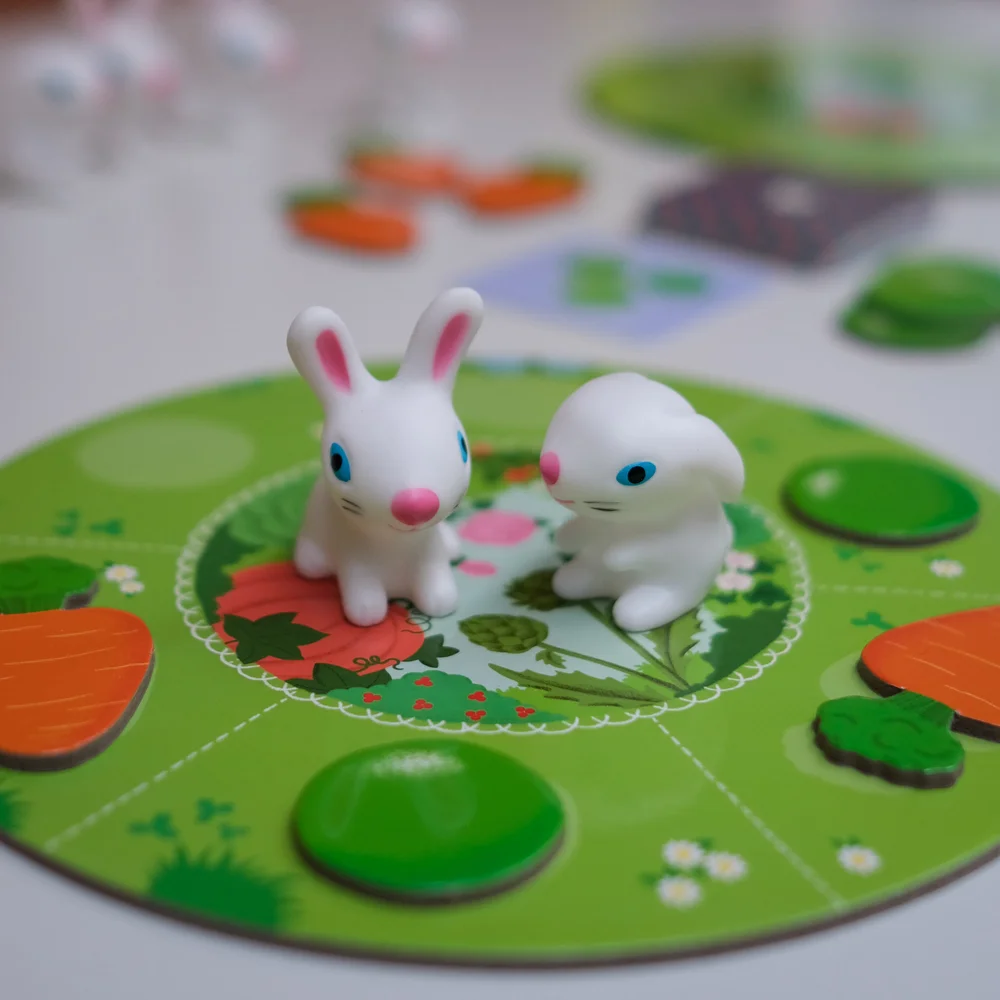
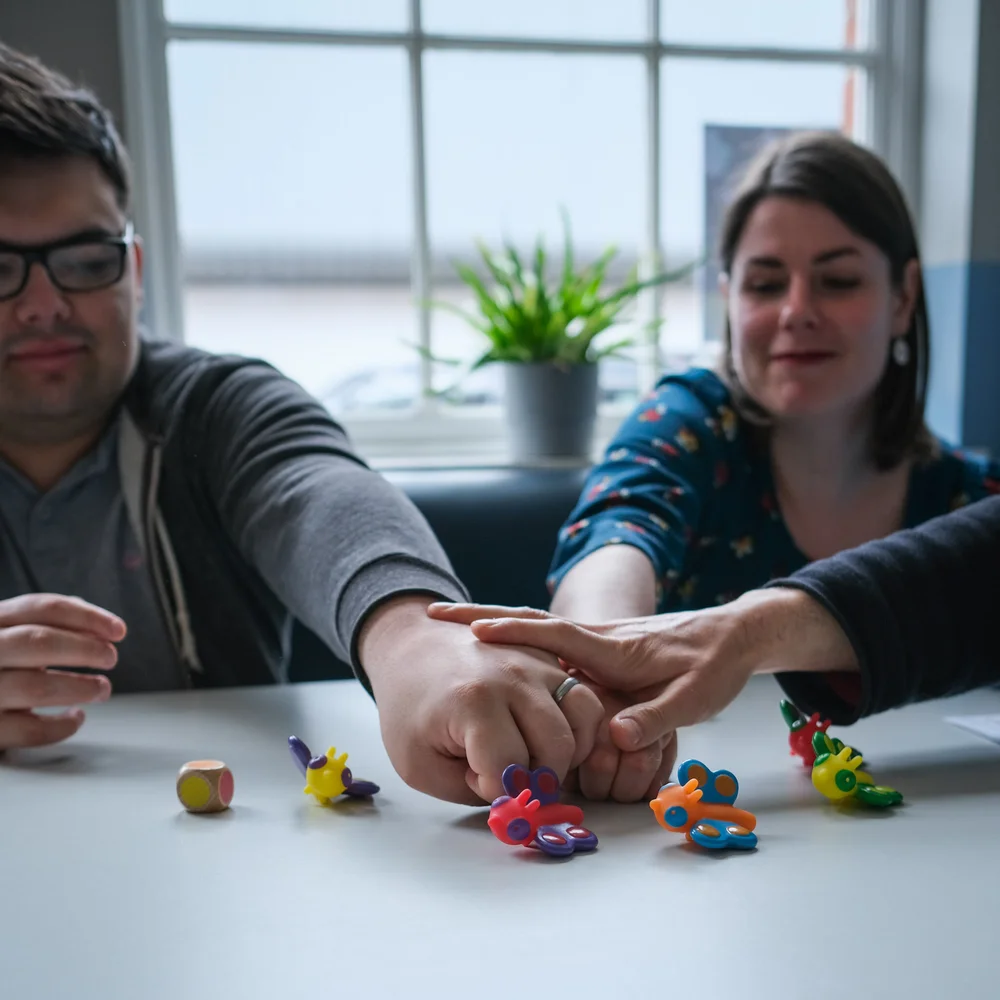
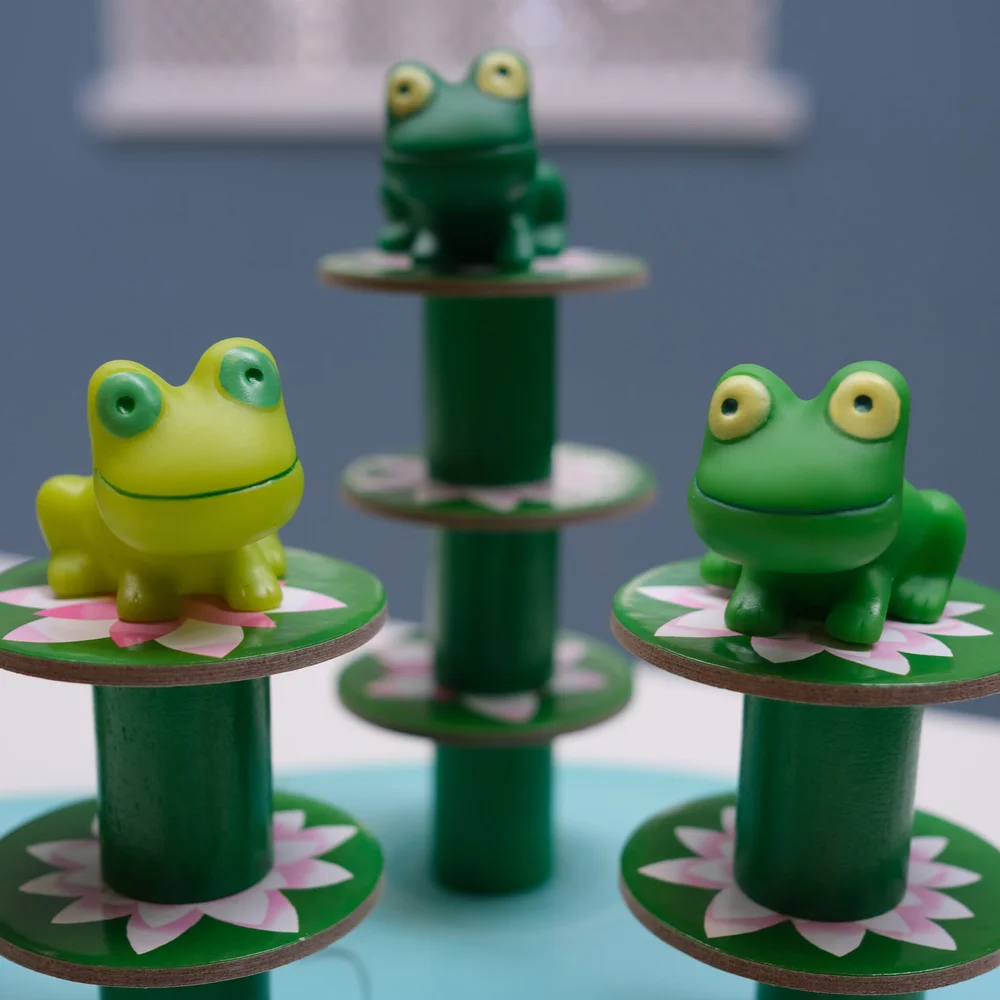
I know, you wouldn’t think there could be a game that would keep a two-and-a-half-year-old entertained, but there is actually an entire series of them by a lovely French toy and game company called Djeco. They have a whole host of adorable games that are both beautifully designed and suitable for toddlers, which is incredibly rare in the world of board games. These games look like a game and feel like a game, but are more about gamifying toddler skills like matching and sequencing and recognising colours. It’s really very clever and the history of this company originally had a child development focus. Add in materials and designs that appeal to a grown up aesthetic and these games are pretty great for everyone. We have several of their games in the shop and our games library but I will focus on Little Collect (in the first of the photos below).
Little Collect is for ages 2.5 to 5. It’s a cooperative game for two players and takes about ten minutes… or as long as attention spans allow. The object of the game ostensibly is to follow picture instructions on the cards you draw until you have completed a scene on the game board. But beware! There is mild peril! The pastoral tableau of adorable bunnies eating peas and carrots can be disrupted. If you are unlucky enough to draw a fox card, one bunny must be ominously removed from your board. It can be returned on a later turn to complete the game, but still. Hey ho, circle of life. Sun rise, sun set. As sure as autumn follows summer, soon enough, even your littlest Little Connect player will be starting school too.
And you know what that means: more time for gaming for you.
Chella Quint is a Treehouse staffer, board gamer, and author of the books Be Period Positive and Own Your Period.